Category Archives: Marketing Strategy

Cruising IFT 2013 – my Top 10 Trends (Special Double Issue!)

Posted on

Don’t let the unsexy ‘Institute of Food Technologists’ name throw you; IFT’s members are basically the source of the Nile for foods and beverages.  IFT’s national Expo was just held in Chicago, where I walked the many miles of the McCormick Place floor so you didn’t have to.  It was where you could see ingredient innovations that will show up without warning in tomorrow’s new foods and beverages.

IFT2013 Main Hall

IFT 2013 – McCormick Place Floor

So for your edification, I hereby present my Top 10 Observations.

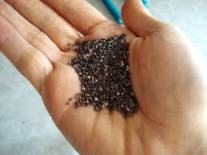
1) Chia.  No, not Chia Pets (although it’s the same plant) or even Chia LaBoeuf. An ancient grain, chia seeds promise high levels of Omega-3, ALA, fiber, calcium and minerals.  One marketer, Salba, targets their ‘super chia seeds’ at ‘smarty-pants’ consumers.  And you will need to think about it a little: like wheat germ, chia seeds aren’t generally eaten alone; they are typically sprinkled on or mixed in with other foods.
Chia Seeds

Chia Seeds

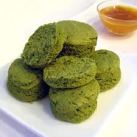
2) Matcha. This finely ground, premium green tea powder has been used ceremonially for millennia in Japan, and is offered in top restaurants worldwide.  For culinary purposes, matcha’s high amino acid content delivers a umami taste profile that can enable lower salt content.  Matcha can also be used as a colorant, due to its distinct green hue. The matcha makers were pushing all manner of green foods made with matcha, not all of which were ready for prime time.  High in antioxidants, you will likely have your first matcha moment at some point soon.  Arigatou gozaimasu.

Matcha 1

Ceremonial Matcha Tea

Matcha 3

Matcha Green Tea Jelly

Matcha scones

Matcha Scones

3) Saskatoon Berries.  So I’m at the Canada pavilion (they’re so nice there) and there’s a display showing Saskatoon berries (aka Prairie Berries) positioned as the next super fruit, with higher antioxidants than all your previous favorites (acaí, goji, etc.).  I try them — and they’re good!  Blueberry-sized but more fleshy, with just a hint of tartness.  Already well-liked for the obligatory preserves, pies and such, you may well be seeing Saskatoon berries showing up in more foods and beverages.  Trivia:  the province Saskatoon was named for the berry, not the other way around.  Who knew, indeed.

Saskatoon berries

Saskatoon Berries

SaskatoonFestival2Saskatoon pie

4) The word ‘pulse’. OK, I don’t live in Legume World, so maybe you’re familiar with the word; it’s always been just beans, peas and lentils to me.  But a lot more grain processors have started using the word pulse; my guess is you’ll be hearing it a lot more in the future.  Probably because it sounds a lot more sophisticated than talking about lima beans. (‘I’m in the pulse business, yeah baby!’)

Pulse grains

Pulse Grains

5) Bamboo Fiber.  This ingredient has long been used for textiles; I just hadn’t seen it in food.  Providing fiber’s benefits of texture, as well as bulking properties that accelerate one’s, ahem, transit time, it is used in juices, baked goods, pasta, sauces, among other applications, and is non-caloric.  And it’s label-friendly, too, being able to be called ‘vegetable fiber’.  I just don’t know the cost for all these benefits – – maybe we’ll sort that out next time around.

Bamboo

you know what this is

6) Natural food dyes.  Not surprisingly, the EU clean label trend has finally waded ashore from the Atlantic and is starting to make greater inroads in US food formulation.  Consumers increasingly want to see natural colors on the label (and of course, we know that everyone who claims to read labels always does).  So instead of CSPI whipping boys Yellow 5 or Red 40, get ready for more paprika, lycopene, annatto, turmeric and of course, cochineal extract.  But if you find out that the color comes from crushed insects, or algae, or your Velveeta doesn’t have its characteristic hi-glo orange-yellow hue anymore, don’t come crying to me.

Natural food coloring - Tribune

Natural food colorings (from Sensient Technologies)

7) Safety testing.  Ever since Roman praegustators, there has been a need for food testing.  And as the stakes have risen recently (see: melamine), based on my observation, so has the number of companies offering testing services to meet SQF and BRC standards (some great tech-speak that can score you some major points in the IFT cocktail hour – – but perhaps not in too many other places).
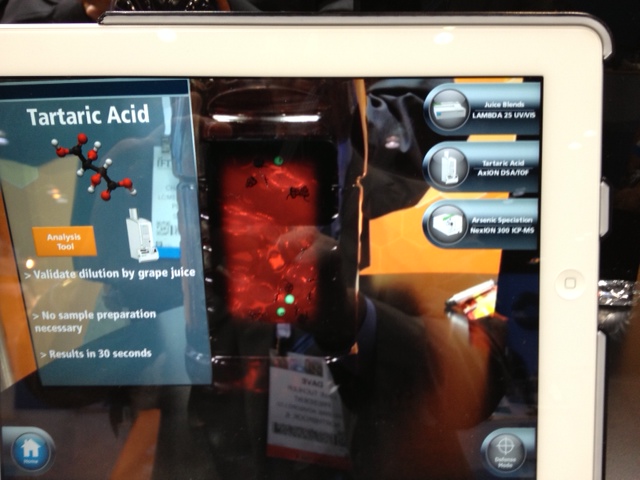
Tests for pathogens, listeria, salmonella, E. Coli, as well as fraudulent ingredients, can be done using HPLC, genetic molecular testing, straightforward micro testing, mass spectrometry, colony counting and zone sizing, and numerous other approaches that I don’t understand, using chemicals, software, and machinery.  As a consumer, it’s good to know that there is such a focus on safety.  As an IFT show-goer, it was disappointing – the food safety guys don’t tend to give out free food or tchotchkes.
IFT2013 testing

This software helps detect ingredients that shouldn’t be there, in this case tartaric acid. It can also see if that gluten-free claim is really true, or if there actually was any Benzedrine in Mrs. Murphy’s Ovaltine.

8) Sodium reduction.  The holy trinity of ingredients to avoid are fat, calories and sodium.  The consequences of over-consuming the first two are visible.  Sodium reduction helps with non-visible dangers like hypertension (dangers that Americans typically are excellent at ignoring), and as a result there has been less urgency.  But it seems that this is changing.  There were quite a few sodium reduction products offered promising great taste, using approaches as disparate as different crystal shape, blended granules, microspheres, starch and baking solutions, and more.  You heard it here first, the age of real sodium reduction has arrived.

IFT Salt

9 in 10 Americans over age 2 eat too much sodium

9) Alternatives to traditional ingredients.  What do you do for news when the main building blocks of food (like wheat flour) are not only mature, but facing new challenges (like GMO-free, gluten-free, etc.)?  You introduce new ways to get there.  Hence flours from sweet potatoes, soy, sesame, flax, coconut, rice, spelt, almond, buckwheat, spirulina and more.  Each has its own taste profile, nutritional benefits, and processing limitations.  You won’t see this stuff in your Twinkies, but it’s coming elsewhere, and it will be great to have more taste, texture and nutritional options.

IFT Sesame Flour

Sesame Flour

10) Maple Water.  Still trying to wrap your head around coconut water?  Well, clear out some mindspace for maple water.  It’s so new, it wasn’t even in the show – – I heard about it from a friendly Canadian.  It seems the Quebec maple producers have launched this product as a thirst quencher, ingredient, and in any case, an all-around transparent strategy to extend revenues from the maple crop.  It is supposed to have a distinctive flavor, slightly sweet.  Coconut water from the south, now maple water from the north, it seems the US has its flavored water NAFTA obligations covered.

IFT_maple-water

(actually, it’s not yet clear exactly what they want us to do with this stuff)

—————-

Bonus points for using this ingredient in YOUR product.

IFT2013 pop-rocks

Open to suggestion.

That’s it – see you at next year’s show!

Relaunching Twinkies – – Attempting Marketing Alchemy?*

Posted on

*Alchemy: “A process by which paradoxical results are achieved or incompatible elements combined with no obvious rational explanation.”  Source:  The Internet

You may have heard that Twinkies are now available again.

NewTwinkies

New Twinkies Collector’s Edition Package

In the spirit of ‘don’t waste a good crisis’, post-bankruptcy, union-free Twinkies management is aggressively marketing the product at relaunch, including PR, a billboard in Times Square, social media, retail presence, and an increased shelf life to 45 days, from 26 previously. (yikes!)

However, they are attempting an extremely difficult balancing act: adjusting enough to develop a new franchise, while simultaneously not alienating the current customer base.  This is a tightrope walk at best; there may be actually no way to serve these two masters with one product.  Twinkies may be trapped in a box.

Pulling this off, based on what’s already been tried in the past, would be a huge success.

As everyone knows, with one ‘Twinky’ containing 150 junk calories and 2.5g of saturated fat (13% of the recommended daily intake), this iconic brand had become out of step with current food trends.  And that’s not to mention 30+ ingredients.

Twinkies ingredients

What’s a Twinkie really made of?

Twinkies had actually achieved some level of cult status for its indestructibility, celebrated in (among other things) a 2012 Super Bowl Chevy Silverado ad.

chevy-super-bowl-blog480

Surviving the Apocalypse – 2012 Chevy Super Bowl Ad

So with much fanfare Twinkies is now relaunching, but long-term growth will still depend on either getting current older consumers to buy more, or getting new younger consumers to buy.  Or some combination.  There’s no other way.  And therein lies the rub.

Is it possible to keep the core elements consistent enough to satisfy the loyalists, while at the same time changing enough to appeal to a new crop of consumers?  Difficult.  New Coke of course comes to mind, as does JC Penney.

Further, this was a product that was off the shelves for a year or so while competitive ersatz Twinkies (now there’s a concept) chased some of the unmet demand.  So it would appear that they have their work cut out for them.

Can they pull it off?  Some clues may come from the new owners (Metropolous brothers) from an interview in March 2013 (my interpretation):
– statement that the brand is bullet-proof (“cannot be killed“)
– confidence that core consumers have high loyalty and can be kept while new ones added (through viral and other guerrilla marketing)
– goal to leverage “younger hipster consumers”…who are “on the pulse of what’s trend-setting
– focus on merchandising and retail execution – with separate grocery and convenience strategies
– willingness to play with the core formula (e.g. the shelf-life extension)
– expectation that product innovation will help grow the business going forward
– statement about cost savings, not being “slowed down with analytics or bureaucracy

TwinkiesExtensions2

Twinkies Historical Line Extensions

I respect the ambition and energy of the new owners.  However, I will hold to my comment about 6 months ago:  despite the incredible publicity, it may be difficult to achieve much upside.).  There is nothing obvious in what we’ve seen so far to support a turnaround, and in fact there may be a few areas of concern:
– focusing on retail blocking and tackling is an excellent move and should yield good results – for the current product
brand awareness is not the same as brand elasticity.  And affection doesn’t necessarily translate to purchase.  Many of us fondly remember the Good Humor bars of our youth.  Do you have any in your freezer right now?
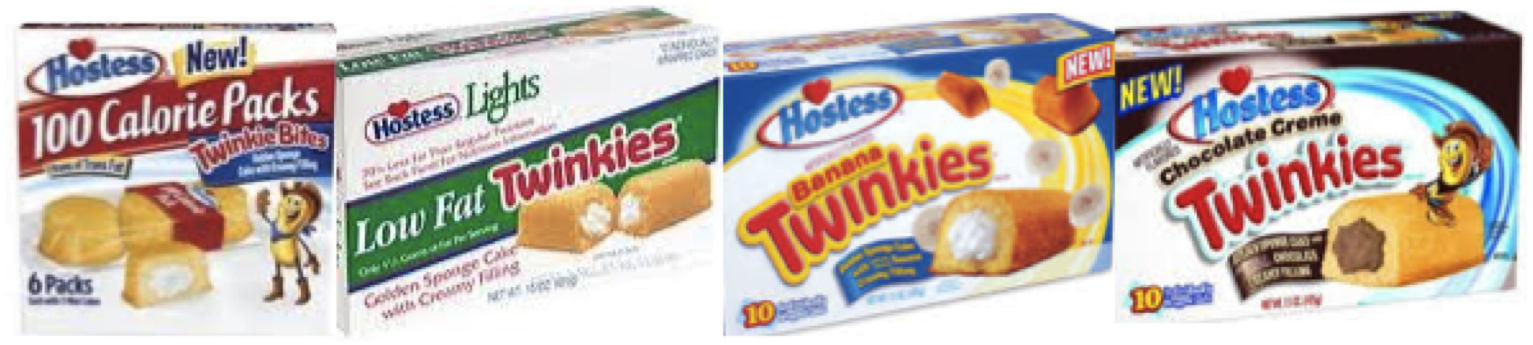
innovating an iconic product may not be that easy – – this is a product with just one proven form. Former management unsuccessfully introduced 100-calorie packs, low-fat, banana and chocolate creme versions.  So extending the Twinkies brand is not exactly an original idea.
willingness to change the original product – – they’re already smaller.  What’s next? Take away a man’s Polysorbate 60 and there could be hell to pay.

Net, we wish new management luck – – it would be great to have Twinkies always within arm’s reach.  But attempting to deliver on two strategies with a single product is a tall order.

What is Velcro doing in my kitchen?

Posted on

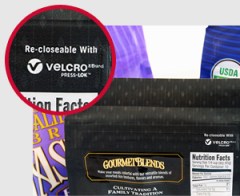
Recently during a demanding session in my exciting new role as Observer in the kitchen, I noticed that a plastic pouch of Lundberg Family Farms Rice had a Velcro closure!  Velcro® PRESS-LOK™, to be accurate, according to the logo printed on the package back.  (technically speaking, PRESS-LOK™ uses a hook-and-hook approach rather than the original Velcro hook-and-loop).

Velcro PRESS-LOK

Velcro® PRESS-LOK™Velcro2Branded ingredient logo

Like you, I’m used to seeing Velcro in jacket closures, little people’s shoes, the IPass transponder on my windshield, wallets, and a zillion other things.  ZZ Top even had a song called ‘Velcro Fly‘ but I’m not sure what they were specifically talking about.

But I’d never seen Velcro used in a food product before.  Why is this, and is it a good idea?  Does a Velcro logo on the package back do anyone any good?  Do I want to be thinking about muddy, stumpy little shoes when I’m (watching someone) chopping kohlrabi for dinner?

Velcro adds value to lots of products, but air- and water-tight seals have never really been part of the equation.  If it’s my food, I want that seal to be so impermeable that if called on to do so, the package swells up like a dead opossum once it goes past the sell-by date.

So, here’s my take.  In short, for ingredient branding to work there needs to be a meaningful new consumer benefit, or strong marketing support, or both.  This arguably has neither.

1) Expanding its applications to foods could be a nice business opportunity for Velcro — but there’s no guarantee.
If PRESS-LOK doesn’t work beyond the relatively unchallenging demands of a benign product like rice (or more importantly, if consumers don’t think it does), PRESS-LOK for food might go the way of the infamously loud, late and great compostable SunChips bag from Frito-Lay – – the answer to a question no one asked (not that you could have heard them).  (F-L Canada at least offered consumers earplugs.  But I digress…).

sun chips earplugs 2

2) This is not likely to bring ’em to the store 6-on-a-mule for Lundberg Family Farms Rice.  You can’t see ‘Velcro’ on the package front (in fact, you can’t even find it on their site), so it’s unlikely to generate new triers.  And one has no idea of what added benefit having a Velcro closure provides.  So any benefit to Lundberg will be if the Velcro closure provides an incredible consumer experience.  But it’s hard to imagine that happening, this being rice and all.
On the other hand, if Lundberg ever wants to sexy up some rice, they need only look to our German friends for how to inject a little Verführung in their brand messaging.

http://www.youtube.com/watch?v=wv6WETcb_pM

Net, from an ingredient branding standpoint, this ends up as perhaps a base hit but not a big deal.  Yes, you’ve now got Velcro introduced into the conversation in a food context, but it’s kept really low-key and the advantages of using Velcro in food packaging are never made clear.  So it’s an interesting alternative to the ubiquitous zip-lock closures but not likely the next Intel Inside.   (For those interested, Landor published a very good article on ingredient branding not too long ago.)

As for me, it’s time to grab a beer, today’s paper, drag my stool over to the kitchen, and get to work.

Restoration Hardware Weighs In Heavy

Posted on

When I first heard that Restoration Hardware was delivering 7 lb. reflections of its founder, I feared that science had finally mastered cloning and was sending us all little Gary Friedman (‘Chairman Emeritus) babies.   Turns out it’s even worse.

It seems that Restoration Hardware, which owes its success to the retro look, is also committed to retro marketing.

RH Spring 2013 catalogs

RH Spring 2013 catalogs

photo-5

Chairman Emeritus Gary Friedman

Last week in my mail I received the latest RH catalog –  make that catalogs with an ‘s’ –no, scratch that – -make it ‘Source Books’ – all 7 lbs and 1600 pages of it.  It is huge, glossy, painfully self-conscious, and utterly uncalled for.  Comprising 5 separate parts (‘Interiors’, ‘Outdoor & Garden’, ‘Objects of Curiosity’, ‘Tableware’, and ‘Small Spaces’), it prominently features the heroic, studiously casual, Ralph Lauren-style visage as well as philosophical meanderings of the founder, Mr. Friedman.  It also features a sober collection of furniture marketers, as well as such fashion-forward innovations as deconstructed furniture.  Yes.  You can now have this for your home.

RH Design Team

RH Design Team

photo-3

Deconstructed chair


You can find some other worthy commentary in the MorningNewsBeat blog.  And the philosophy of Mr. Friedman in the inside cover pages (“uh, do you mind if I, um, quote myself?”) is worth a quick look.

Now, to be fair, I’ve bought things at RH before (although I can’t remember the last time), and among the weirdness they do have some very nice stuff, although it always seemed overpriced.  But I can’t figure out why they would invest anywhere from $3 to $18 (depending on who you ask) to send this bulky material to my house.   I didn’t ask for this crap!  How does this ever pay back the millions invested?  New users?

Beyond the RH website, the catalog itself is available online as an iPad/iPhone app, which seems more consistent with how people shop.  And sending this enormous bulk of paper, in addition to being highly wasteful, now requires effort on the part of environmentally-conscious recipients – to execute recycling properly.  Mine went to the bin right after the photo shoot.

More likely, it is a true ego reflection of the founder – – and reveals his most basic underlying philosophy: size matters.  In a final unintended irony, an almost whispered disclaimer on an insert commends itself on sending this catalog ‘twice a year rather than monthly’, and encourages consumers to ‘participate in the recycling programs in their communities’.  No kidding.

Please recycle!

Please recycle!

Warby Parker, and why Brands Don’t Matter

Posted on

Brands don’t matter?!?  Blasphemer!  Heretic!  Neanderthal!  Republican!  Put down that crack pipe!

This is of course counter to everything you hear (and if you know me, everything I say).

But it’s true, with an asterisk: Brands often DON’T matter – – until they do.  Then they matter a lot.  It all depends on what value is delivered.

At the risk of alienating my friends in the branding business:  look at some of the more successful recent brands , or just brands you’ve used everyday and never really thought about (Yahoo!  Google.  Zappos.  Ebay.  Subway. Apple.  AT&T.  Starbucks. Blackberry. Target. Kindle. MiO. Allegra.).  Even better, musical artists:  Stone Temple Pilots.  Foo Fighters. Neutral Milk Hotel.  Arcade Fire.  Queen – – no, strike that last one.  Anyway, you get the point – – does any of these in any way describe the product or service?  (and let’s not get started on prescription medicines…). Asked another way, did the brand have a material impact on success?

WarbyParker

Which brings us to Warby Parker.  Warby Parker is a relatively new web-driven mail-order prescription eyeglass business that has totally disrupted this space.  The concept:  shop online, they send you 5 frames to try out at home, you pick one, get them your prescription and you’re immediately sent designer eyeglasses for $95!  So from a value perspective it’s a great deal – – sort of in the same mold as Target – – call it cheap chic or funky frugal or whatever – – their value recipe is cooking right now.

But that’s not all.  Like Zappos, WP have distinguished themselves with over the top customer service.  Every message, call, post or Tweet is answered personally, promptly, and cheerfully.  The combination of value and service has created a significant buzz that is helping to propel the business very quickly.

So where does the ‘Warby Parker’ name come from?  Who cares?* — because of a winning value proposition and excellent execution, it NOW means something very valuable and unique that drives customer loyalty – -and that’s the value of a brand.

*According to the WP website, it is actually a combination of two characters’ names from Jack Kerouac’s work.

Sure, the exceptions to the ‘brands don’t matter’ statement could fill an e-book:  Oikos and Chobani convey Greek; Twitter suggests short bursts of conversation; SquareSpace describes a computer screen, Orapup means something to do with a dog’s mouth, etc.  These and others can help quickly telegraph what’s going on, particularly where authenticity is critical or where marketing funds are limited.  And certain brands can definitely convey a sense of quirkiness — or seriousness — that is core to the product or service’s desired positioning.

However – – while many electrons are spilled proclaiming the value of brands, the most important thing is ultimately not the brand itself, but the lasting value and relevance that the brand delivers.

Restaurant: Impossible — When a Do-over Becomes a Don’t-over

When a business is flagging and a fix is needed, one option is a so-called make-over – changing the value proposition in some fundamental way.  But whether it’s a new coat of paint or a full shock treatment, it needs to be done thoughtfully – – even the most brilliant plans require consistent execution, cultural buy-in and consideration of the existing audience.  We naturally illustrate this complex business concept with a reality TV show.

RobertIrvine

Viewers of Food Network’s Restaurant: Impossible are familiar with the premise:  Robert Irvine, the heavily muscled and overbearing ex-British Royal Navy chef (think BCG consultant with no quadrant charts but much bigger arms), is given $10,000 and 2 days to fix a failing mom-and-pop restaurant, usually with some loyal customers but mostly declining sales.   Using a time-tested recipe of fast-track remodeling, menu conversion, come-to-Jesus chastising of waitstaff and awkward family interventions, liberally seasoned with shouted bullying, he ‘helps’ the owners open a new version, to unanimous (although not always articulate) acclaim of the capacity-straining first night patrons.  Voila!  Happy tears and promises to stick to the plan.  Using  a solid executional game plan, these restaurants look transformed and set for future success.

Each episode’s epilogue boasts about resulting increased business; these stories are catalogued on the FN website.

But does everyone really live happily ever after?  I snooped around and discovered that the show’s final scene is not necessarily indicative of the longer-term outcome.  There are numerous breakdowns in food, consistency, and service.

Nicholson FEP

Using Yelp.com reviews of a few transformed restaurants, here are some typical comments.

Show Claim:  “Since Robert left, sales have increased 85%“.  Typical review: “The food is just as bad as it was prior to Robert’s makeover.  The menu is no longer one page.  They are book style, dirty, and sticky.   As far as the wait staff they need to go. Final thoughts…don’t go.”

Show Claim:   “Business is up by $30,000 following the renovation”.  Typical review: “…you can see where Robert’s team did their magic for decorating, but it ends there!  Tables have paint chips/scuffs and look kind of crappy…floors weren’t swept, waitress wasn’t at desk when we walked in and had to wipe off our table prior to us being seated!  I think we could have gotten food just as good if not better at a bowling alley!  I will not be going there ever again!”

Show Claim:  40% increase in YOY business for first 2 months.  Typical review: “I would return for the wings but everything else was pretty average.”  Note:  Restaurant CLOSED.

The point:  without an organizational commitment to faithfully execute the plan, all the planning in the world can be for naught.

——-

In addition, a number of the owners subsequently brought back some of their restaurant’s traditional featured items, which Chef Irvine had cut from the menu – – and they did it based on customer demand.

Testimonial from one makeover recipient who needed to make his own adjustments:

“We had to bring back our beef cannelloni, even though that dish is frozen,” said John Meglio of Meglio’s Italian Grill and Bar in Bridgeton, Mo. “Chef Irvine kept telling us that we needed to make more fresh food, and that makes perfect sense. But what he didn’t know is that people here have been eating frozen pasta from this one supplier in St. Louis for the last 50 years.

Meglio continues: “The food was good; it just didn’t fly.  You make too many changes too fast and all it’ll do is upset people.  And the changes upset people to the tune of not coming back.”

Cannelloni

Another owner was aware of the need to balance current and future customers.

He recruited his brother, a chef, who took a look around and issued a dire prediction in the wake of the initial publicity.

“He said, ‘You won’t have time to build a new reputation, and in the meantime your old customers won’t like what’s happened and will leave,’ ” Mr. Queisser said. “And he was right. Ten or 12 weeks later, it was like the lights went out.”

There is a well-done account of this from the NY Times.

—-

In fairness, some of the made-over restaurants clearly have benefited.  But it’s clear that without both excellent executional follow-through and attention to customer acceptance, the best-laid plans from the best consultants in the world will be as stale as yesterday’s Tiramisu.

JCPenney, Fresh and Easy, Webvan: “Did someone remember to tell the customer how brilliant we are”?

OK, that headline is a bit harsh.  But so is the world of retailing – – no matter how high-concept and inspired a new retailing idea is, if it doesn’t integrate the core consumer in the development process, there could be trouble.  We will respectfully dance on a few graves and illustrate with 3 cases.

BordersQuote

Case 1:  JCPenney.  By now we all know that Ron Johnson flew a bit too close to the sun, banking on his reputation and the obvious hubris gained during his successful run at Apple.  He applied the Apple Store model (where the stars were ultimately the products) to JCPenney, with an immediate switch to an everyday pricing approach (since reversed), and store remodels including branded mini-boutiques.  All, famously, without testing.  The result:  a disastrous $4 billion sales slide, imploding stock price, his ouster and most recently JCP looking to the capital markets to secure another $1 billion in operating cash.  Ouch.

30-OFF-COUPON-CODE-JCPENNEY-CLEARANCEJCPenney - WSJ

—> Diagnosis: Less brilliant, more tone-deaf.  The plan counted on consumers to see things Ron’s way:  “Hey! JCP now offers reliable low pricing all the time, so you can trust us!”  The catch:  consumers apparently liked the way they already shopped – -they were used to buying on deal, and there was not much merchandise at JCP that couldn’t be bought elsewhere.  And elsewhere is apparently where consumers went.

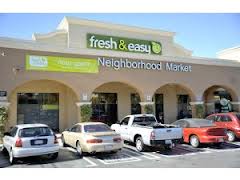
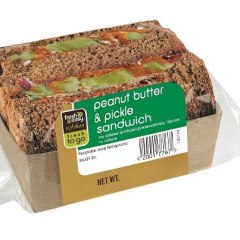
Case 2: Tesco’s Fresh & Easy Neighborhood Markets.  British supermarket giant Tesco announced it will shutter and take a $1.5 billion write-down on its F&E chain, after cumulative losses exceeding $1 billion and 5 years after noisily entering the California market. Fresh & Easy, which famously touted its in-depth consumer research, opened smaller format (10,000 sq. ft) stores and promised “convenience, fresh produce and tasty prepared foods”  (LA Times).

Fresh N Easy

FreshEasy PB&Pickle

—>Diagnosis: They didn’t walk the talk.  Rather than truly adapting to Americans’ shopping habits, Tesco essentially imported its own model and assumed that customers would do the adapting.  A few examples of British norms that didn’t make it here: pre-wrapped produce (heavy on the watercress!) and pre-packaged sandwiches (but no fresh deli), fewer familiar branded products in favor of higher-priced private label, and a policy against couponing.

According to respected researcher The Hartman Group“We believed then, and said it repeatedly in the following years, that Tesco had an innate desire — an arrogance if you will — to do things their way rather than make adjustments that catered to the needs and expectations of American shoppers. Despite Tesco’s vaunted success in the European marketplace, the resulting retail experience in Fresh & Easy was artificial, sterile and increasingly without a relevant proposition.” (bold added)

Case 3:  Webvan.  The mother of all examples of misjudging the consumer.  Founded in the late 1990s by Louis Borders (of bookstore fame), Webvan was an online grocery retailer offering delivery within a 30-minute window.  Funded by Silicon Valley venture capital, Webvan hired away the president of Andersen Consulting (now Accenture) and was heavily capitalized ($1 billion for warehouse infrastructure, plus vans, computers, etc.)  By 2001 Webvan was bankrupt (although subsequently bought by Amazon, where it exists in a much smaller form).

webvan truck webvan stock price

—> Diagnosis: Webvan management and investors incorrectly assumed that consumers would immediately adapt to their genius.  Grocery buying is very personal, an ingrained habit, and expecting large numbers of people to abruptly abandon what they’ve been doing for years was naive at best. In the heady days of the dot-com bubble #1, funding was fast, and it was big (Borders himself said “It’s $10 billion or zero“.  He was right).  So the inclination was go big or go home, leading to huge advance spending, astronomical traffic expectations, and a spectacular flameout when consumers didn’t sign up as the financial pro formas had assumed.  By one estimation, Webvan would have had to sign up two-thirds of the tech-savvy households in the San Francisco area.  This is probably one of the best examples of misjudging (or conveniently ignoring) consumer input, breathing one’s own exhaust, as well as the adage ‘Easy come, easy go’.  A short, fun post-mortem can be found here.

Are New NCAA ‘Play-Out’ Exhibition Games the Real Madness?

Posted on

You may have already heard that late Sunday night the NCAA abruptly announced the biggest change to the NCAA Division 1 Men’s Basketball tournament (‘March Madness’) since at-large teams were first allowed in 1975 (previously only one team per conference was invited).

The short story: on Final Four Sunday, April 7, the day before the Final, there will be now be 3 so-called ‘Play-out’ exhibition games between former No. 1 or No. 2 regional seeds that have been eliminated (including Ohio State, Indiana, Duke, Kansas, Georgetown and Miami; specific matchups and times to be determined).  These games carry no official significance but clearly will have strong fan appeal.  CBS will schedule these games so as to not interfere with the Academy of Country Music Awards broadcast, which starts at 8pm EST.

March-Sadness

NCAA officials explained these changes as an effort “to satisfy the unexpectedly strong recent demand among NCAA Basketball’s rapidly growing fan base, particularly internationally”.  It is no secret that March Madness has evolved into an enormously popular event.  Even President Obama took time from his schedule to weigh in.  In addition, the event’s female viewers, already 48% of the audience, make up an increasingly ardent fan base.  Still, satisfying new fans is not at the center of this decision.

The real motivator is much simpler:  Money.   Turner Sports and CBS, seeing early tournament exits by most of the more popular top seeds, are exploiting the networks’ unsurpassed ability to create more hours of high-quality entertainment.  Advertisers have already signed on, and since the participating schools were offered a generous share of the revenues, gaining their participation was relatively simple.  Only former No. 1 seed Gonzaga declined the offer, due to a conflict with a Tech N9ne concert in Seattle.

BBall Money

This is a sad example of short-sightedness, laying bare the craven quest for TV ratings that we now see is the real driver behind many of the sporting world’s decisions.  Unfortunately, it is a severe body blow for the integrity of NCAA Basketball and big-time sports.  Clearly, the theory goes, while everyone loves a Cinderella, you still don’t really expect huge numbers to tune in for Wichita State, right?  So, why not just bring in the biggest names for a curtain call?

Here’s why –  in this era of sports free-agency and seemingly limitless payrolls and budgets, it’s important to remember that the unexpected can and does happen – – with talent, grit and maybe a little luck, on any given day, David can slay Goliath.  Hence the excitement for FGCU and Wichita State.  They’re the real reason we tune in to March Madness, even if they do destroy our brackets.  Diluting the event with meaningless games just for spectacle will only cheapen the NCAA brand while overshadowing the teams deserving of our attention.

So, a message to the NCAA, CBS and Turner Sports:  you’ve got a jewel in the current March Madness (as long as the field doesn’t expand) – and it’s exactly what people are looking for — as is.

United Airlines, Mom’s Missing Jewelry, and the Asymmetry of Customer Feedback

Dad used to say “If you don’t have anything nice to say, don’t say it”.  Mom prefers the double-positive version.

What if people spent the same energy to praise good deeds as they do publicly complaining?

woman-wagging-finger

Someone rub you the wrong way?  Got your knickers in a knot?  Well, post it somewhere and see if you can get it to go viral.

It’s easy to rage publicly over real or perceived slights.  We can turn millions against a company, deserved or not, while we bloviate in anonymity with no repercussions.  It’s like punching the schoolyard bully in the face remotely from your basement. And generally, it’s how a lot of people tend to roll.

Well, sometimes companies actually do good things due to someone’s actions; unfortunately people seem to be less motivated to share when things turn out well – – isn’t that what we’re entitled to? – – so you’re not likely to hear about it.  And so the story of United Airlines, my mom and the lost jewelry.  But first a quick bit of context.

Remember the ‘United Broke My Guitar’ guy?  Back in 2009 United Airlines broke his guitar and refused to compensate him for it.  In frustration, he posted a song on YouTube (13 million hits), wrote a book, and became something of a travelers’ cause célèbre.  Ultimately, of course, United realized it had screwed up, rightfully made him whole, and learned a painful lesson about ‘an ounce of medicine’ or something like that.

This weekend my 82 year old mother flew into town and discovered she had lost her jewelry bag.  On her return trip, since she of course gets to the airport 4 hours early, she had time to check United lost & found.  Lo and behold, not only did United have it, but the jewelry bag was immediately returned to her, intact and untouched!

Blue Jewelry Bag

It apparently had slipped out of her bag in the overhead compartment on the way over.  This means not only did all the passengers, staff, and cleaning crew ignore a temptation, but somehow THE SYSTEM WORKED:  It found its way to Lost and Found, was properly coded into the system, and a United representative was actually able and willing to locate it and immediately give it back to its owner.  Wow.

I don’t know about you, but I lose more than my fair share of things and I NEVER get anything back.  And this was a jewelry bag within a complex system with thousands of flights and hundreds of thousands of passengers daily.  (Full disclosure:  it was costume jewelry – – Mom’s been to the rodeo a few times – – but they didn’t know that).

This must happen with some regularity.  So why don’t you generally see companies praised publicly for excellent customer service?  Mom has been a professional pianist for over 60 years and is in fair voice, so she could do her version of Guitar Guy on YouTube, but she has a full schedule of 35 students a week and like all of us, is too busy.

I also suspect that praising a big company just isn’t cool; you’re not sticking it to the Man when you say something positive.  This will be just one of many transactions of this United representative, the majority of which likely won’t have as happy an ending.  And that’s too bad.

AirlineAgent2

Maybe the readers of this post could forward it to a few people as a reminder that sometimes good things happen because someone gave extra effort, and that it wouldn’t be so bad to send out an Attaboy once in a while.   See if you can get it picked up.  You might just make someone’s day.  Here’s a little primer on how to get started.

Butterfly Bakery: Heading back into the cocoon

Today’s news brings us the cautionary tale of Butterfly Bakery, which is no doubt trying to find a cocoon to hide in after an onslaught of mostly self-inflicted pain.  This is primarily a lesson on the importance of transparency, authenticity and speed in the age of 24/7 public scrutiny.

ht_butterfly_bakery_blueberry_muffins_nt_130314_wblog

The short story:  Butterfly Bakery, a small Clifton, NJ baker of special baked goods (e.g. sugar-free, no sugar added, gluten-free, etc), is suffering through its 15 minutes of fame courtesy of the FDA, which forced it to close its doors after discovering that sugar and fat levels in several of its muffin and cookie products were well above what was claimed on the label.  Selected products had 3x the stated levels of sugar and 2x the indicated amount of fat.  This has led to some explanatory statements on the BB Facebook page and caused the charming looking website to be taken down.  The Twitter feed has also stopped.

ButterflyBakeryScreenShot

So — what’s the big deal?  Isn’t this just another case of the government unfairly picking on the little guys while ignoring ‘big business’?  After all, only 3 products of 45 were cited.

Well, yes and no — but mostly no.

– it turns out that the original FDA complaint is almost 2 years old, and that BB was well aware of the issues.  Here is an excerpt from their Facebook statement:  “Butterfly Bakery, Inc. acknowledges the claims in the FDA press release dated March 13, 2013. Butterfly Bakery voluntarily entered into a consent decree and has been working with the FDA and a team of technical and regulatory experts since May 31, 2011, to improve its processes and ensure compliance with all Butterfly Bakery products”. [bold added]

– May 2011?  Based on comments on their FB page, their customer base was clearly not aware of anything, and they are now suitably outraged.  2 years is plenty of time to reformulate, repackage, explain to customers, and flush out all inventory.  An FDA inquiry would seem to have been a strong hint to watch nutritional claims closely.

A matter of health – these products draw heavily from diabetics and celiac sufferers, for whom safe, tasty treats are often difficult to find.  BB’s products apparently tasted great, which is now not surprising since that’s largely what sugar and fat are for.  So whether intentional or not, BB enticed customers with better taste, while simultaneously putting them in danger because of misleading labeling.  This is not just a case of ‘I’m mad you didn’t tell me’, it’s a case of putting consumers at risk.

You never get a 2nd chance to make a first impression – – Butterfly Bakery has now gotten its first national publicity, which is hugely negative, and they will forever be associated with this scandal.  They will immediately forfeit retail distribution and may have trouble regaining it. But perhaps most importantly, they have violated the trust of their most important constituency – their customers, which may be impossible to restore.

Collateral damage – – other unrelated Butterfly Bakeries have already had to start issuing disclaimers that this doesn’t apply to them.  But clearly potential customers will have pause before buying from them.

The upshot:  Hindsight is 20/20, but Butterfly Bakery could have positioned themselves most positively back in 2011 if they had acknowledged some inaccuracies in labeling, offered refunds, and pledged to a new level of scrutiny.  They would have been seen as being committed to their customers.  Now the opposite is true, and their options are limited.  At least they have not made the mistake of trying to fight hand-to-hand on Facebook (see Applebee’s case).