How’d that work out?
Author Archives: davetuchler
Is Spelling Dead?
“Must be a good speller” has of course never been on any creative agency job description, in the same way “must be able to feign interest” has never appeared on any state DMV job spec.
It’s just honesty in what matters when being true to your company’s DNA.
(I actually was once presented an agency pitch where they spelled our company’s name wrong on the front page. And I say – Fine! Part of me suspected this may have been done on purpose, to subconsciously demonstrate the agency’s creative bona fides).

Companies hire agencies not for their spelling, but for their right-brain creativity, an ability to channel the zeitgeist of the current culture, see the unseen, peer around corners, delight the masses – – or at the very least recite the end benefit dictated by the client, clinically articulate some sort of reason why, and spend weekends furiously preparing work for a Monday morning deadline that the client will not bother to read until late the next week.
On the other hand, everyone else in the client’s creative development food chain is supposed to be boring left-brainers – – you know, MBA brand managers, corporate lawyers, etc. – – the adults in the room. Their job is generally to mold the work into something that will ideally retain a speck or two of passing resemblance to what the agency presented and was approved, but mostly to keep everyone from getting sued.
Complicating things, in this culture where calculators have replaced the ability to do simple math and watching John Oliver counts as keeping up on current events, the written word has come increasingly under attack – – my auto-correct gives me ‘gonna’, ‘wanna’, can’t tell a plural from a possessive, etc. – – and the word ‘literally’ can now be used to imply exactly the opposite.
But the techno-world has accommodated these realities – – through Grammarly, spellcheck, etc., we can check copy automatically to make up for the increasing absence of people who know that ‘gonna’ isn’t a word.

So it was a bit surprising that a full-page, back cover color ad in today’s WSJ ($300k+) has a prominent misspelling on probably the focal word in the message – ‘rarified’. We may give the agency a pass, but a clear fail on the client’s word police, and also potentially the paper (after all, the correct spelling – ‘rarefied’ – is used in an editorial piece just a few pages away.) Is no one in the ad department checking the copy?

I don’t want to hear ‘but if no one knows the correct spelling, who cares’, or ‘a misspelling will change the purchase intent of exactly no one’, or ‘what they used is technically an alternate spelling’. All are probably true.

But my points are more true.
Rant over. I hope this generates furious conversation about the merits and importance of good spelling in ad copy.
But more than that, with all the negativity surrounding us these days, I hope this has provided a few minutes of (admittedly mindless) distraction.
Happy Holidays. Now get back to work.
What Jimmy Buffett Taught Us about Marketing
A lot of people today are remembering the late Jimmy Buffett, who created a genre and was by all accounts one of the good guys in show business.

I am not a Parrot Head, but I am quite familiar with Buffett’s music, centered mostly in the period (late ‘70s) where he hit his stride and established his unique and enduring style.
Apart from the music he created, Buffett was also a remarkably astute businessman, over the years amassing wealth recently estimated at around $1B, during which time he was probably mostly wearing flip-flops.
It becomes apparent that this guy knew what he was doing, so with all due respect and a tip of the Panama Hat, here are a few things we can learn from Jimmy.
Be alert to what’s working, embrace the unexpected, and adapt to create your niche
- Growing up on the Gulf Coast, Buffett spent time with his ship captain grandfather, and learned guitar in college just as a way to attract women. He moved to Nashville in the late 1960s and worked for Billboard magazine while working on his music. His first record (Down To Earth, 1970) was more Country than anything (because, Nashville) and even though it sounds musically like a lot of his later work, was a relatively unremarkable first effort.
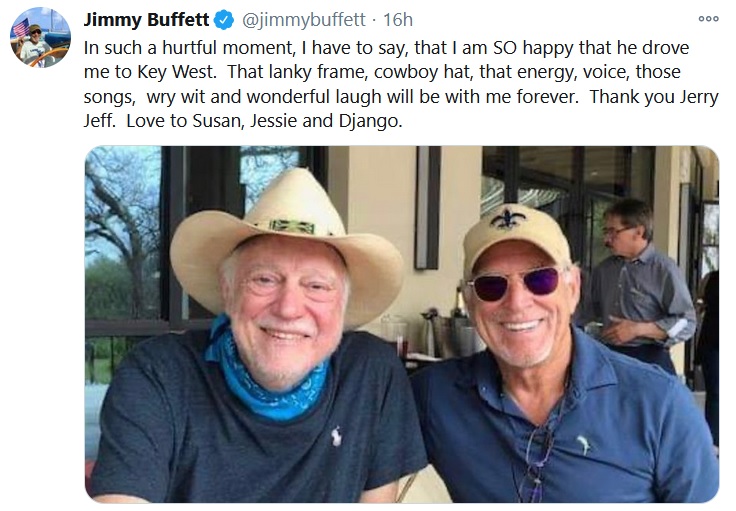
- Then, somewhat randomly, outlaw country artist Jerry Jeff Walker took Buffett to Key West, Florida. It was there that Buffett mashed up the laid-back beach scene, Caribbean influences and the classic country music requirement of a great story in a unique way, and created his niche, which he sometimes called ‘Drunken Caribbean Rock ‘N Roll’.
- When his sophomore effort ‘A White Sport Coat and a Pink Crustacean’ came out in 1973, the Buffett brand was started, and he never looked back. Margaritaville, which came out in 1977, cemented his brand.
LESSON: Me-too is no fun. Not everything in life can be planned. Figure out what about your offering is both unique and appealing, and be flexible on who the target is. We all know that Buffett did not build his success among Country music fans, even though that’s what he originally was going for.

REALLY understand your brand
- Jimmy Buffett wrote a lot of great songs, but what created passionate fans was not the music itself (they’re mostly pretty straightforward), nor the lyrics (although he tells great stories).
- What was unique about Buffett was how the music made his audience feel. This is about relaxing, parking your troubles for a while, and enjoying life with other people.
- Everything Jimmy Buffett did (songs, concerts, etc.) was in service of generating this laid back, good time feeling. That is why people bought the albums and went to the concerts. It’s not Progressive Rock; it’s a 6-string guitar, maybe some pedal steel or steel drums, and having fun.
- Buffett toured aggressively, because he understood that it was all about the experience. His tours generated more revenue than his record sales.
LESSON: The more you can understand why people gravitate to your product or service, the better you can do in not only offering more of the same, but also positioning and marketing what you do. Ultimately, it’s not always about tangible features, but how it makes someone’s life a little better or more fun.


Extend your brand opportunistically, but thoughtfully
- Besides his off-stage exploits in acting, directing, writing novels, composing soundtracks, and being a conservationist, Buffett was very busy and very successful and disciplined in staying on-brand in his business ventures.
- The following is just a partial list:
- Restaurants: Margaritaville restaurants, Landshark Bar & Grill, Cheeseburger in Paradise restaurant
- Food and Beverage: Margaritaville Tequila, Margaritaville Foods, Landshark Lager
- Entertainment: Margaritaville Casino (in Atlantic City NJ), Margaritaville Online video game
- Music production: Margaritaville Records
- Retirement living: Latitude Margaritaville, large senior living communities in progress or planned in Daytona Beach, Hilton Head and Panama City. (at some point Buffett realized that his audience was pretty close to him in age).
- Last but not least: Coral Reefer brand marijuana and vape products, and Margaritaville Footwear (trigger warning: it’s not just flip flops!)


LESSON: if you’ve got a strong product or service offering, isolate what makes your product popular and apply it in other areas to generate growth – but just make sure that the thing that makes the original offering popular also translates to extended offerings.
A lot of people who hadn’t listened to Jimmy Buffett in years (or decades) are missing him now – – because of an appealing state of mind that he offered.
A great example of the most basic of marketing rules:
Be unique if you can, understand your brand, and stay on brand.

My $300 cup of coffee (and why it matters)
Sometimes, the obvious ‘authorized’ solution is not the best solution. Sometimes, the best solution is where small and nimble is way better than huge, well-resourced and all-powerful.
Specifically I’m referring to the level of customer service, expertise and attention you can get from independent small business owners.

Recently I managed to spill half a cup of coffee onto the keyboard of my MacBook Air. I rely on this laptop heavily so a quick fix was needed. First, let me tell you that Plan A, the solutions you find online, WILL NOT WORK. Turn it upside down for 4 hours, blast it with air, don’t blast it with air, use a hair dryer, yada, yada, yada. At least, they didn’t work for me.

Calling Apple (Plan B) produced a few options: 1) Bring it to a local store; first available appointment was 1-2 days away, in a location 30 minutes away. The likely scenario was that they would then send it out for repair. 2) Ask for a special shipping container so you could send it directly to the Apple repair facility; minimum time 5 days. Both were not guaranteed solutions, either would be $500+ and at least 5 days, not an acceptable outcome. In any case, I would be one faceless customer among many, talking with employees who were bound by corporate policies and guidelines and who probably don’t have skin in the game.
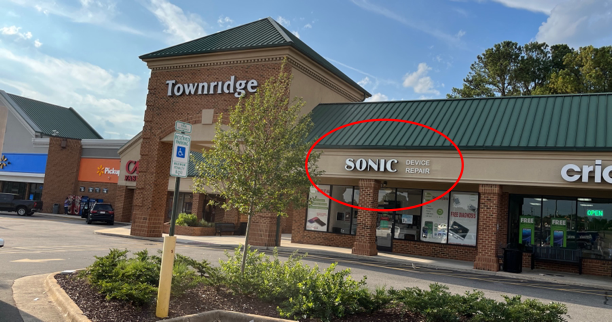
Since the laptop was out of warranty I went with Plan C: a small local independent computer repair shop, inconspicuously located in a strip mall next to a local WalMart (no glass design and wood floors here; just a linoleum floor and a counter inside the door). These guys listened, understood my situation, and offered an option that would use cannibalized parts from a donor laptop for anything I needed, in lieu of waiting for new parts. 90-day warranty. $300 (ok, actually $299). Turns out I needed a new touchpad and a few other parts I don’t understand. They had this thing turned around within 4 hours; picked it up the same day. Works perfectly.

What’s the point? According to the Small Business Administration, small businesses generate 44% of economic activity in the U.S. (GDP), and a large share of new job creation. To ensure their very survival, they need to provide some sort of advantage against their competition, including better resourced large companies – – advantages such as selection, location, consultative guidance, price, customer service, etc.
Do you really think Dylan over at the Genius Bar is going to be as committed to your satisfaction as a business owner who relies on reputation and word of mouth?
As a consumer, you can benefit by finding and leveraging the strengths of small independent businesses – – it could be a computer repair shop, car repair, plumber, coffee shop, whatever. Online sites (like Angi and NextDoor) are making word of mouth easier.

As the owner of a small independent business, I can attest to the need to bring your best game every single day.
So next time you need a service, why not give a local independent business a shot? You’ll be boosting the local economy, helping a business owner meet payroll, and you might just get the solution that best fits your needs.
Just remember that if you visit your local independent coffee shop, put a lid on your cup.
Revolutionary VR and AI Technology Enables MLB Opening Day at Home for All Teams Simultaneously*
On March 30, 2023, Major League Baseball did something unprecedented: they held all the opening day games as virtual reality events. Yes, that’s right, every single team got to play their home opener in their own stadium, without having to leave the comfort of their own homes. How did they do it, you ask? Well, it was all thanks to the magic of VR technology.

You see, each team’s stadium was recreated in stunning detail in the virtual world. Fans could log on to their team’s VR channel and be transported to their favorite team’s home field. They could even choose their own seat, just like they would in real life, and feel like they were really there. But the best part? No more expensive tickets, long lines for concessions, or having to deal with rowdy fans. It was like the ultimate baseball experience without any of the hassle.

Of course, there were a few hiccups along the way. Some fans accidentally logged into the wrong channel and ended up watching the wrong game. Others struggled to adjust to the VR controls and found themselves accidentally teleporting onto the field. And then there were the players themselves, who had to adjust to playing in front of empty stands, with no crowd noise to feed off of. Some players even admitted to feeling a bit lonely without their usual home crowd cheering them on.

But overall, the virtual opening day was a huge success. Fans from all over the world were able to come together and experience the thrill of baseball without any of the usual drawbacks. And who knows, maybe in a few years’ time, all sports events will be held in virtual reality. After all, why bother leaving the house when you can have the ultimate fan experience from your own living room?
*EDITOR’S NOTE: with the exception of the photos, ALL headline and body copy above was generated by chat.openai.com.
Everyone has a story

We at The Armchair MBA are very aware that the person you may see simply as a revenue-generating customer is actually a human being with a unique history, identity, and set of hopes and challenges. Just like you.
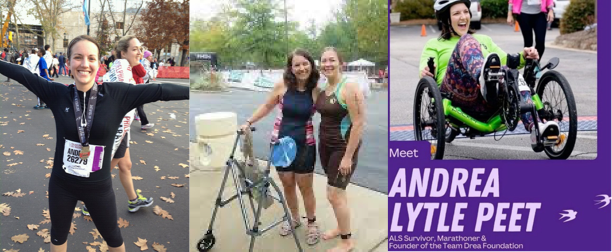
This past Saturday we were humbled by the courage and determination of a customer. We only learned her backstory after completing a consultation and sale (about 1 hour).
As described on her website: “Andrea Lytle Peet was diagnosed with ALS in 2014 at the age of 33. In eight months, she went from completing a 70.3-mile half Ironman triathlon to walking with a cane.
Remarkably, she has continued to participate in races on her recumbent trike. In May 2022, She became the first person with ALS to do a marathon in all 50 states!“
ALS diagoses typically are accompanied by a 2-5 year life expectancy. Andrea has passed year 8, is not passively accepting her situation but is attacking it full throttle, and has raised over $1 million for ALS research.

A documentary about her story ‘Go On, Be Brave‘, will debut at the Santa Barbara International Film Festival next week (and will be shown at the Durham Theater in NC in June).
Check out the trailer: https://vimeo.com/727898354
Always remember that the person on the other end of the transaction has a story – – just like you.
Customer Service sometimes means having to say you’re sorry
We at The Armchair MBA have always advocated that a strong response to a misstep can actually leave you better off than if things went as originally planned.

As reported in the Wall Street Journal, a small manufacturer of gourmet olive oils, Graza, felt they had not lived up to their own, or customers’, expectations through this past Holiday season.
Rather than concoct a complex and costly PR campaign to mollify frustrated customers (as the owner said “we are a 11 month old 5 person business LOL”), the owner simply sat down and wrote an email to roughly 35k past customers apologizing for shortcomings and promising to do better.
You can view the letter below. Hope your eyes are up to the challenge.

By all accounts the outreach has had a great positive effect – – not only was the letter’s transparency appreciated by many of the 35k recipients, but in an outstanding example of ‘collateral benefit’, it was picked up as a story by one of the biggest newspapers in the world (daily circulation around 2.8 million), AND The Armchair MBA is talking about it as well.
On the other hand, in addressing a small issue, the inevitably greater resulting demand will likely have created some much bigger challenges…for starters, production capacity might be getting some additional attention.

We wish Graza well. I would imagine that they will be expanding to more than 5 people in the near future.
What 3 years in the wheelchair business can teach you about your customers

Today we mark our 3rd anniversary since we took a career left turn from corporate marketing and opened a business serving the disabled – our name is Step Ahead Mobility. We’ve served over 1300 customers since we opened in 2019.

In that time we’ve learned a ton about the industry, but also about customers – and a lot of it applies to any industry.
We’re not really about just wheelchairs.
Our mission is to help people improve their independence – whether it’s a power wheelchair to get around the house, a lift recliner to for those who can’t otherwise get out of a chair, to a hospital bed for hospice care, to a cool shouldn’t-be-this-fast mobility scooter for people who just aren’t able to walk very far on their own.

Our customers are disproportionately older, but we’ve also had pediatric customers undergoing brain cancer treatment, weekend warriors who have blown out their Achilles doing Crossfit, former HS quarterbacks who had a disabling stroke in their 40s, and otherwise very healthy young customers recovering from cosmetic or reconstructive surgery. We serve a lot of veterans (including WW2), a fair number of amputees, and people suffering from degenerative conditions such as MS, MD, Parkinson’s, etc.

Sounds depressing, right? Couldn’t be further from the truth. While we got into this business for strategic market reasons (demographic trends, recession- and Amazon-resistant), the biggest plus by far has been having the ability to directly impact the lives of others.
And while we help others, it’s more than made up for by what we’ve learned from them.
Here are a few observations:
- Listen to the customer! We have a strict rule to never recommend anything before hearing from the customer what their needs are. Sometimes they come in convinced they need A, but they really need B. Our job is to get them what they need, not necessarily what we want to sell.

- Our success depends on trust. Our customers are often faced with an unexpected challenge, when they’ve been perfectly healthy all their lives. Sometimes the customer is the adult child of an older parent, sometimes it is the parent of a grown adult child. They need solutions quickly in an area they are unfamiliar and uncomfortable with. Like a good car mechanic, they need to have complete faith that you are working on their behalf, with integrity.
- We try to see our customers at their best – – not just how they appear today. While they may not be as able to communicate as they used to, the majority of our customers are smart and thoughtful, and want to be treated that way. The stooped 85-year old man was a hero in military service; the frail woman was a striking ballerina. The woman who can’t speak clearly was a popular philosophy professor. The little quiet guy with the walker was a CEO. This is part of their self-image; and this is how we try to see them. Treating our customers with dignity is absolutely essential – -always.

https://seeitlive.co/102-year-old-sees-herself-dancing/

https://www.bbc.com/news/uk-england-cornwall-39922912
- Play the long game. We sometimes have hour-long consultations with walk-in customers about the best solution to a challenge they’re facing, only to have them walk out without buying anything. But we feel that by providing good information and building trust, they may return later – -and this has proven to be true many times.

- You don’t know the customer’s story – so don’t judge. Yes, they may be in a wheelchair or have a walker or be severely overweight or be cranky or impatient – – but chances are they’re dealing with something you’re glad you don’t have to deal with. So be patient.
- Never underestimate the strength of everyday people. We are amazed and humbled by the incredible quiet love and courage of loved ones and caregivers – – whether it’s a husband’s patience in taking care of a severely disabled wife, to a daughter uncomplainingly caring for both her kids and her parents, to a mom dedicating her life to an adult child who cannot communicate. These people are true everyday heroes, and they are all around us.
- Customers don’t want to be serious all the time. Without question, every single person who contacts us would rather be doing something else, and many are dealing with something serious. You get to be very good at consoling in this business. But they’ve got enough stress already – a little humor can provide a welcome break. In our case, our slightly creepy mannequin carries our ‘think positive’ slogan, as well as an ever-changing quote to hopefully bring a grin – which it usually does. We want our customer experiences to be as positive as possible. Just be thoughtful as to what’s appropriate to each situation.

—> One of our favorite customers, Mr. Moses, came in looking for a fancy walker. He was “98 years old; going to be 99 in 2 months”. WW2 vet. Armed with a pile of printouts about specific models and pricing. He asked about all the details and then said, “what’s the warranty”? He thought about that for a few seconds, then said “never mind”. <—
Management Lessons from a Gangster

Confession and trigger warning: I’ve been listening to podcasts of Sammy ‘The Bull’ Gravano.
And I was surprised at some of the valuable management skills he used in his past day job.

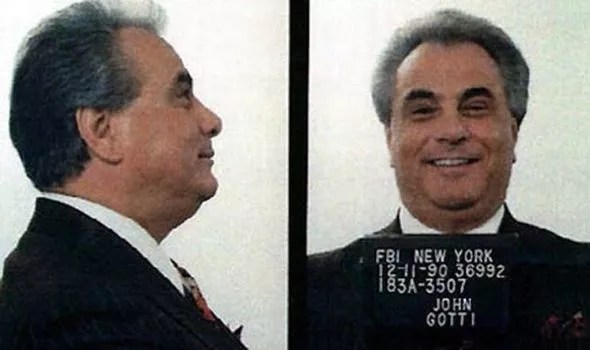
If you’re not familiar, Salvatore Gravano was a big-time gangster and all-around bad guy, mostly in the 1970s and 1980s and mostly with the notorious NY Gambino mob, as a street guy, then a Made guy (formally initiated), then a Caporegime (or Capo, a captain with his own crew), then Consiglieri (think Robert Duvall’s Tom Hagen in The Godfather), and ultimately Underboss, reporting to the uber-notorious John Gotti – effectively, he was sort of the COO of the Gambino family.
If Gravano had a LinkedIn profile, it would be pretty impressive – – loyalty to his organization, steady rise to top management, etc. – – falling short, however, in the areas of education (8th grade), and the fact that he, uh, spent over 22 years in prison. (I did check and no, he has no LI profile- yet).


His list of crimes ranges from the petty (stealing spare tires from car trunks when he was in a street gang) to shakedowns of various flavors, to the truly horrible – murder, either directly or as a planner, 19 by the FBI’s count (most famously, planning and executing the murder of the head of his own Family, ‘Boss of Bosses’ Paul Castellano, Gotti’s predecessor – in the middle of Christmas shopping crowds in NY in December 1985).
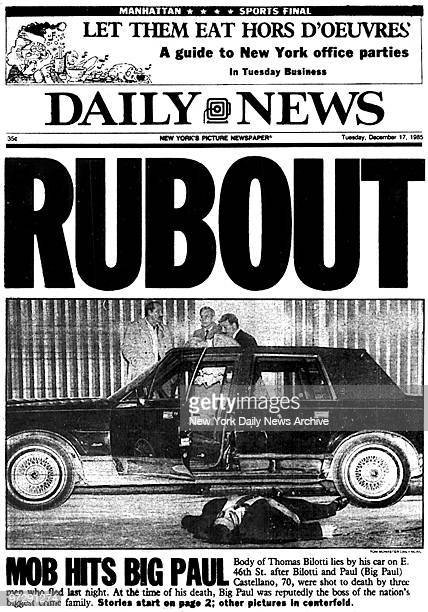
The first lesson is compartmentalization. I’ve always felt that there’s something to be learned from virtually everyone – from career mentors to role models to competitors to my dog Rizzo, who is super capable of being in the moment. It requires focusing on something important and ignoring everything else.
In this case, learning from a mobster requires the ability to separate the guy described above from the gruff, but relaxed and confident 77-year old you hear in the podcasts. While he committed a lot of heinous crimes that can never be forgiven, at the same time he also has some interesting takes on his past that can be helpful to us ‘legitimate’ people.
- Gravano is a master compartmentalizer – – rationalizing the crimes of the past and softening them with statements about how he always did the right thing or what was required of him after pledging loyalty.
- Moral Hazard Disclaimer: You need to be comfortable with the fact that listening to his podcasts in some way puts money in his, and Patreon’s, pockets.
Lesson: Loyalty to the organization, but with limits. Everyone knows that the Cosa Nostra demands utter loyalty – above family and faith. You do what the Boss demands without question, you keep him informed, you expect the same from those you lead. The penalty for screwing this up was usually not living long afterward.
- Gravano took his loyalty oath seriously but not blindly. When the mercurial Gotti would order a hit, Gravano on multiple occasions would challenge Gotti’s command, encourage him to calm down and reconsider, rather than act on impulse and create bigger issues.
- At the same time, after both of their arrests in 1990, when Gravano heard that Gotti had asked for a plea whereby he would throw Gravano under the bus, he reconsidered his view of loyalty and cooperated with the FBI against Gotti.


Lesson: Win-win. Gravano had outsized influence with labor unions on huge construction projects (not a few of which were Trump projects). Rather than exerting influence through threats of violence, he created unique schemes whereby all parties came out ahead (except, of course, the people paying for the buildings) – ensuring the loyalty of those he got payments from. And while his education stopped at 8th grade, he had practical experience running construction companies and was adept at running the numbers.
See also: Speak softly and carry a big stick
Lesson: Loyalty to people. Without question, personal loyalties were extremely important to Gravano, and he would go to significant lengths to help those he had loyalty to, even at personal risk, often for no financial benefit.
Lesson: Planning. Hearing the planning involved in some of the hits is eye-opening; sometimes it would take months. Staking out, detecting patterns, having plans and back-up plans, deploying decoy cars to block or distract police, etc. The goal was to anticipate every possible scenario and cover for it.
Lesson: Sunk cost. Despite planning, sometimes the unexpected did happen – -and despite having lots of assets in place, at times Gravano would assess the situation and cancel the hit. Considering the severe potential consequences of not executing the plan, this was no small decision.
Lesson: When in hole, stop digging. Gravano was arrested in 1990 and served 5 years as part of a plea deal, released in 1995, moved to Arizona. The end of roughly 20 years in the mob, with access to the Witness Protection Program (which he quickly opted out of). Free to start anew.
Which he did. In 2002, he was arrested for running a drug ring, got a 20-year sentence and was released a bit early in 2017. Oops.
He is by all appearances walking a straight path now.
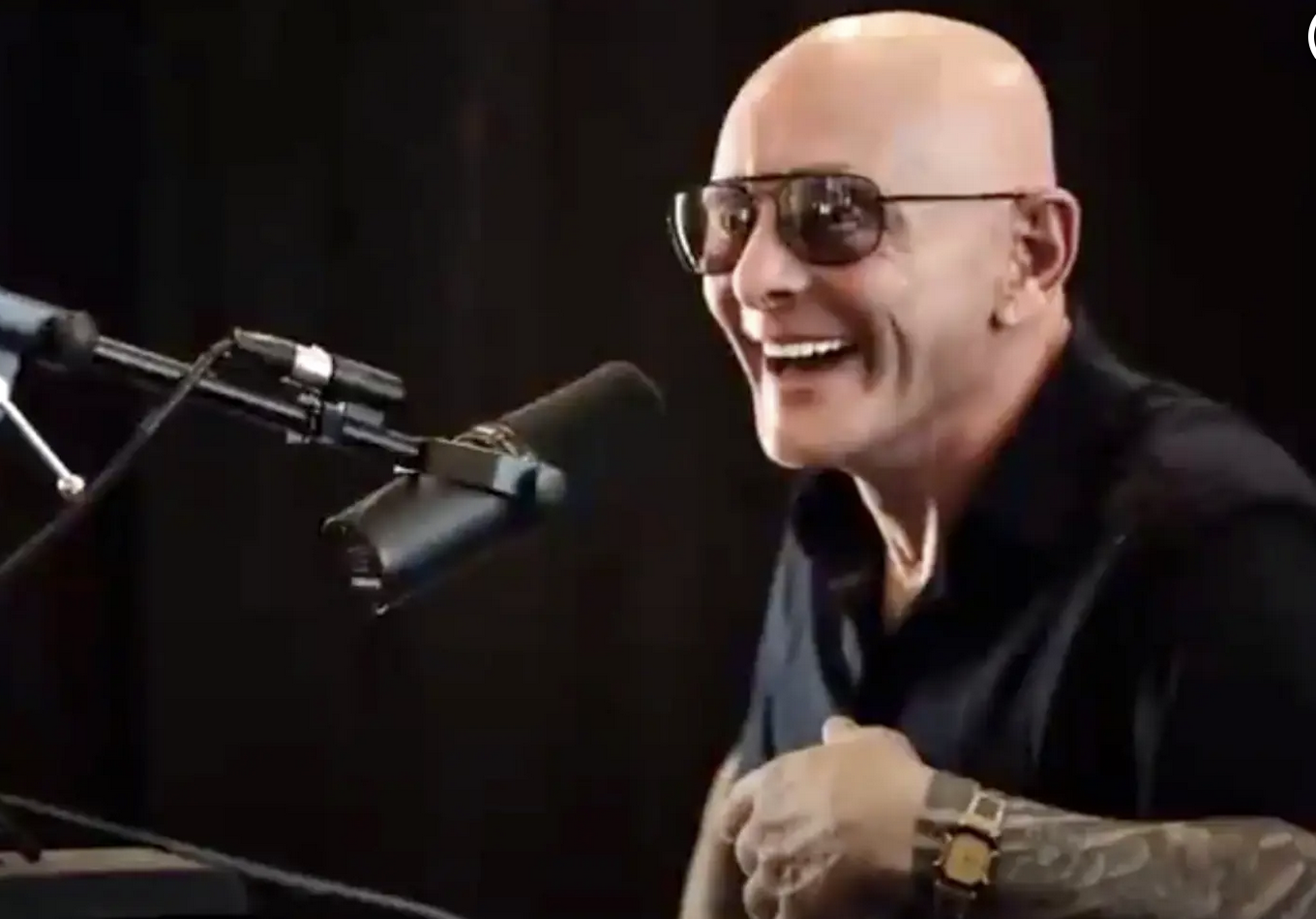
Final lesson: Adapt and survive. This poorly-educated, street-smart, morally challenged 77-year old was previously mostly comfortable with a gun. He is now a podcaster and YouTuber, and you can hear him grimace when he asks you to ‘Like and Subscribe’ at the end of his podcasts, as his handlers insist. He also now does live ads for companies like watch company MVMT (“I don’t often take off my Rolex, but when I do, I wear MVMT” or “I know about doing time”), or counseling company betterhelp, or online insurance broker Policygenius. He also has a website and a number of other ventures.
Re: adaptability, see also: Madonna
It’s a strange world. Competence comes in all shapes and sizes – – some of the most brilliant minds unfortunately are those of criminals, for example:
- Hijacker D.B. Cooper
- Hackers
- Ted Kaczynski (Unabomber) – evaded capture for 20 years
- Frank ‘Catch Me If You Can’ Abagnale (although apparently some of his stories are made-up, making them a different type of scam)
- All the real smart ones who haven’t been caught
We can’t (and shouldn’t) benefit from the crimes of others, and criminals should not be rewarded for their crimes.
But there can be a benefit from observing criminal minds.
The Ever Given does not fit in the Erie Canal. The White House thinks that’s a problem.

Last week’s shipping disaster involving the Panama-flagged Ever Given delayed transit of over 400 vessels, with lost trade and added costs totaling an estimated $400 million per hour.

In the wake of this crisis stemming from the accidental grounding of a massive 1300 foot container ship that blocked the Suez Canal, the Biden administration moved quickly to add $17 billion in its recently revealed infrastructure package to prevent such an occurrence from happening in the country’s 25,000 miles of inland waterways.

As the crisis grew in the Suez region last week, frantic planning sessions in the White House West Wing were added to the budgeting process to fold potential appropriations into the larger package.
An administration spokesperson explained: “The grounding of a ¼ mile ship within US borders was something we frankly had not contemplated – – so, guided by Rahm Emanuel’s credo ‘never waste a crisis’, so we did what we felt was necessary. Many canals are well over their 50-year planned life span and so we feel this is an appropriate upgrade”. The dimensions of the Ever Given are the administration’s benchmark.
President Biden himself said: “We all saw this disaster happen – – you saw it, I saw it, the world saw it. I could see it coming. Now all eyes are on us. The Erie Canal – you know that song – it’s part of who we are. C’mon man, it’s pretty clear that we can’t let a massive ship like that get stuck in the U.S. If this Administration can’t figure out how to get money for this project, who will?”.

The challenge is daunting, considering that the Ever Given is 1312 feet long, 193 feet wide, and requires about 47 feet of depth. The depth of the average canal in the U.S. is 9 feet.
Details of this $17B budget component have not been revealed, but a spokesperson said: “It would involve things like dredging and widening the Mississippi and other waterways, enlarging many of the 150-year-old locks to accommodate a ship occupying over a quarter million square feet, and of course addressing the related need for added restrooms, eating facilities and gift shops at major ports”.

When asked about the related cost to then build all new bridges and roads to service these expanded waterways, the spokesman said: “That will be Phase 2 – – we’ll address that during the second Biden administration”.
 The Armchair MBA