Category Archives: Branding

You LOVE Modified Foods – you just don’t know it

Posted on

Modified foods are everywhere and we all prefer them. I am, however, not talking about GMOs. No whining diatribes here (stage whisper: get over it).

No, in this case I’m talking about word modifiers. You know, descriptors: adjectives and their ilk. The way food is described has a big impact on its appeal.

Despite your insistence that it doesn’t affect you, it does.

ApplewoodBacon

We will approach this post with increasing levels of pretentiousness.

Let’s start with bacon (please!).
“Applewood Smoked Bacon” sounds delicious, and is possibly the most perfect meaningless descriptor since it conjures images of fruit and juiciness and wholesomeness but in reality is not detectable for most people*. Closely related is hickory smoked. Everyone smokes their bacon and hickory is the most commonly used wood. But you will buy either of these before you buy something called simply ‘smoked bacon’.
*According to Joseph Sebranek of Iowa State University, “most of us can’t tell much of a difference.

Artisan

Everyone in the food business plays these games. Restaurants use throwaway terms like farm fresh, handcrafted, artisan and slow-cooked to lend some authenticity to otherwise generic fare. ‘Crispy’ has more appeal than ‘fried’ and ‘poached’ sounds better than ‘boiled’.

And these modifiers can help the bottom line. Stanford’s Dan Jurafsky and colleagues studied 6,500 U.S. restaurant menus covering 650,000 dishes, and found that “every increase of one letter in the average length of words describing a dish is associated with an increase of 69 cents in the price of that dish.

This article in the Daily Mail does a great job describing this phenomenon and explaining what’s going on – – essentially a fancier name is there simply to support a higher price.  To absolutely no one’s surprise.

And this handy chart can help those of you who are thinking of opening up a restaurant.

Screen Shot 2016-07-31 at 9.22.50 PM

Marketers would be well-advised to use descriptors to add that extra bit of specialness to their offerings.  And not just food – just watch a few minutes of direct-response marketing to get a heavy dose of it.

Fancy modifiers, in addition to driving appeal, can also make a dish more socially acceptable. How else to explain that you’ll feel ok ordering ‘poutine’ on a first date but maybe not ‘gravy-drenched fries with cheese curds’?
Inward Focus is not Customer Focus

Posted on

velveeta1

The apocryphal story goes like this:  at the old Kraft, the Velveeta brand manager crowed during Brand Review (think: Inquisition without the charm) about his 95% market share of ‘pasteurized process cheese spread’.  The senior marketer, Yoda-like, then asked “but what is your share of all cheese used for cooking?”, to which the Brand Manager burped out “around 5%”. The senior manager suggested that maybe there is more to marketing than just comparing yourself to your own internally defined category.  And she was right.

Sometimes as marketers we forget that not everyone (read: no one) thinks about our product as much as we do.  This myopia unfortunately translates to missed opportunities.

Marketers need to consider each product interaction as an opportunity to intrigue and possibly inspire a new user.

What are hardwood pellets?
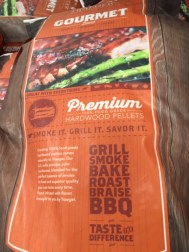
During a recent Costco expedition I went to grab the traditional, if unexciting, big blue bags of Kingsford for the summer.  My 40 lb snatch and heave into the cart was interrupted when I noticed an appealing orange bag with copy that excitedly extolled the virtues of what was apparently an alternative – – gourmet hardwood pellets!  They promised ‘superior quality you can taste every time’ and ‘food infused with flavor’!

PelletsPellets2


Curious about a potentially new way to spend even more money in the vain hope of improving my grilling, I looked further at the package to see what these ‘pellets’ were.  I was up for it!

Unfortunately, there was no explanation of what pellets are, no visual of what they look like, nor any indication of how they might be used.  Nothing.  You apparently were either a Pellet Person or you were unimportant to the manufacturer, Traeger Wood Fired Grills.

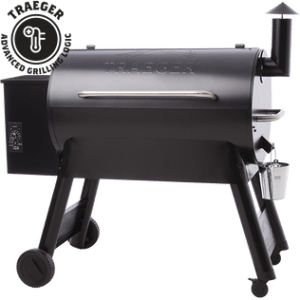
A quick smartphone check revealed that there is indeed a unique type of grill that uses pellets instead of charcoal.  These devices are also made by Traeger, which features grills from about $400 to $1200, along with a huge array of accessories.  Cool looking stuff.

Pellets!

And it appears that pellet grills are a growing segment, presumably stealing share from traditional charcoal or gas grills.  Because they require less effort.  Of course!  God Bless America!

Raichlen

According to the aggressively coiffed Steven Raichlen, the host of cable’s Barbecue University and writer of the Barbecue! Bible blog, “the Hearth, Patio and Barbecue Association (HPBA) reports that wood pellet grills are one of the hottest trends in the industry, offering consumers the primal flavor of wood smoke coupled with the turn-of-a-knob convenience of gas. Roughly 300,000 units were sold last year—less than 2 percent of total grill sales—but the popularity of pellet grills is surging.” (http://barbecuebible.com/2015/02/20/new-pellet-grills/)

Presumably those people in the pellet grill business would be interested in inspiring avid grillers, like…me.  But they whiffed on this chance.

There is a basic lesson here – – don’t waste a valuable potential messaging opportunity.

TFB88PUB_BLU_01

If you are in a position where potential future users may be exposed to your product or service, don’t breathe your own exhaust – – remember that there are people there who might be interested – – if you just give them a little information.

So even if you consider yourself the king of your particular pellet hill – – remember that there’s probably a bigger mountain to climb out there.

I Know, It’s Only Rock ’n Roll, but…

Posted on

We try to refrain from simply reposting articles but this is a great example of how basic business principles can apply pretty much anywhere.

BN-NW458_Stones_J_20160504165415

The Rolling Stones – Masters of Their Universe

The Wall Street Journal recently ran a short article highlighting keys to the remarkable success and longevity of the World’s Greatest Rock ‘N Roll Band.

Ultimately, following these guidelines (with some caveats) are a pretty good prescription for success.

  1. Choose the right name.  We’ve commented before that a company shouldn’t try too hard on finding the perfect name.  If the product is excellent, the name will seem genius in retrospect  (witness Death Cab for Cutie and the Arctic Monkeys – – or the Beatles for that matter).  So, really, there are 4 tips here, not 5.
  2. Find a unique position in the market.  The Stones realized that they could be the bad boys relative to the Beatles’ wholesomeness.  Everyone loves a bad boy.
  3. Creatively beg, borrow or steal.  The Stones’s early hit “The Last Time” was gently lifted from the Staple Singers’s “This May Be The Last Time”  – only with a more catchy guitar riff and decidedly different lyrics.  They made that song their own, unlike Robin Thicke, who more blatantly ripped off Marvin Gaye.  Be inspired, but don’t plagiarize.
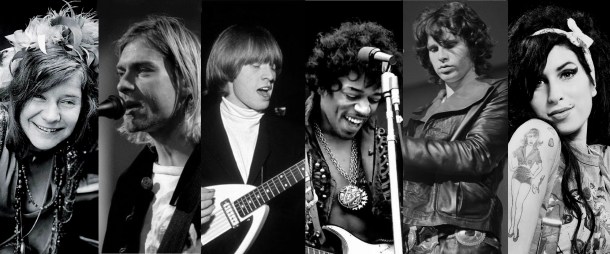
  4. Shed barriers to success before it’s too late.  The Stones’s arguably most talented member, Brian Jones, became unreliable and disruptive.  The group decided they needed to kick him out if they were to succeed.  They did, and a month later he was found in the bottom of his pool, another member of RnR’s infamous 27 Club.

5.  Continually reinvent.  Markets change, competition changes – – to survive long-term you must be able to anticipate and change.  Madonna and David Bowie are great examples of morphing to meet the need.  The Stones’s 1978 album Some Girls was a direct response to the threat of the burgeoning punk scene that included new artists the Sex Pistols, Ramones and the Clash.  Definitely different product than “The Last Time”.  As Keith Richards remembered, “It moved our ass, boy”.

Perhaps not something you’d hear from Peter Drucker, but still illuminating.

April 1 is when the ad guys (and gals) REALLY get creative

Posted on

Many of you know that at The Armchair MBA we have at times indulged in a bit of tomfoolery, and April 1 is no exception.

The best April 1 pranks are those that have the initial feel of legitimacy, but as the reader continues there is a point where it just goes too far.   Like the frog that ultimately boils, when well done it’s sometimes hard to pin down the exact point of departure from truth.

MelaniaCare (last post) was one that, while fabricated, we have started to believe ourselves – – and it might come true yet.

The attached was also discovered on April 1 so posting here.

FITBIT® introduces Step CreditsTM

But the real prize is this collection of April Fool’s Day pranks, compiled by Lisa Lacy of Momentology.  If you have a moment, these delightfully demonstrate the magic that results when creative and devious minds are working for themselves and are liberated to listen to their own inner gremlins, rather than trying to placate some client.

http://www.momentology.com/10210-april-fools-day-marketing-moment/

Bon appétit!

Trump Bolsters His Brand with MelaniaCare

Posted on

The recent announcement on Donald Trump’s website about the development of MelaniaCare may end up being just more fodder for late night comics, but it actually is a smart move and entirely consistent with the Trump brand.

“MelaniaCare”, like ObamaCare, is a nickname – in this case for the Appearance Optimization Act (AOA), inspired by Mr. Trump’s wife.

In short, MelaniaCare proposes that all legal American residents be given access to affordable services that assist in optimizing physical appearance, including serious birth-related issues, but also a broad range of cosmetic deficiencies.   Treatments would be funded by a mandatory allocation of 10% of services of relevant professionals (such as plastic surgeons) to citizens with insufficient means to afford treatment. Mr. Trump has promised to personally fund procedures that he deems high priority.

MelaniaCare

In Mr. Trump’s words, “As much as we glorify education in this country, what is never talked about is the enormous, huge impact that appearance has on one’s ability to be hired and advance in a career. Appearance enhancement has until now been available only to the most privileged. MelaniaCare would assure that these procedures are available to all, so everyone would have an advantage. And believe me, in my campaign travels I’ve discovered that there is a huge need for these services, often for some very nice people.”

Under a Trump Presidency, if MelaniaCare is signed into law, here is what it would mean:

  • All legal female US residents over age 20 and under 60 would, within one year of enactment, be required to have a free appearance assessment, consisting of one facial photograph and two full body photographs (front and back), that would be taken at any US Post Office or passport office. Funding for these photographs would be through an extension of the ACA (ObamaCare).
  • Photographs would be assessed via computer algorithm, indexed against age ranges (20-29, 30-39, etc) as well as regional norms (West Coast, South, Midwest, New York,  Texas, etc.) as determined by regional panels of age-appropriate men. Similar to a draft number, each participating citizen would be given an ‘appeal’ rating from 1 to 10, with those ranking 1 having highest priority for immediate and mandatory enhancement services. Those ranking 7 or above are not expected to require any further treatment.
  • Level of subsidization will be calculated through a formula balancing severity of need with ability to pay, and will be administered by the Internal Revenue Service.
  • Treatment will be required within one year of receipt of appeal rating, after which time appearance will be reassessed by the same panel. Patients deemed to not have sufficient improvement will be ‘fired’ (in program parlance) and will be given appropriate visas and moving expenses to relocate to other countries, or to a rural ‘containment’ area within the US, where they will support the US telemarketing infrastructure.
ContainmentArea

CONTAINMENT AREA

MelaniaCare coverage would include these treatments (among selected others):

  • Nose job, breast augmentation, tummy tuck, eye lift, and in some cases the full ‘mommy makeover’

Acceptable conditions for treatment include:

  • Crow’s feet, turkey neck, buffalo hump, FUPA, jell bell, RBF, muffin top, muffin bottom, computer face, puff daddy, wenis, love handles, parentheses, saddlebags, banana rolls, marionette lines, bunny line, elevens, smoker’s lines, and bat wings

To keep costs under control, there would be no refunds, do-overs or appeal process in the event of unintended treatment-related effects such as: 

  • Trout pout, dog ears, bat brow, ping pong face, wind tunnel face, frozen face, skew-whiff eyelid, turkey tummy, pillow face

AssessmentStation


Men’s appearance will be addressed after all women have been assessed, treated and relocated as appropriate.

MelaniaCare was tested for 15 months in Scottsdale AZ and Palm Beach FL, and while the level of untreated citizenry was extremely low, the mechanics of the program worked well. Per Mr. Trump: “Scottsdale and Palm Beach were enormously successful tests of the system, which gives us really unbelievable confidence when we extend it to areas of extreme need like the Midwest and Appalachia”.

Attractiveness as a determinant of success is a taboo topic, but undeniably is a real factor that is perpetuated by popular media. Mr. Trump, true to form, is unapologetically addressing this issue head-on, and claims that ultimately it will help the American people “in a really big way”.

“Pardon the expression, but a hot woman gets more attention and preferential treatment than an ordinary-looking woman. Think of the advantages the US will have if we export those who have been given a fair chance but just aren’t making it, and we improve the appearance of everyone who remains. We will tilt the playing field in our favor and will be able to negotiate some unbelievably awesome deals”.

MakeAmericaHot

Mr. Trump has already unveiled a new baseball cap promoting the program.

Wags are predictably calling this the Affordable Hotness Act (AHA), and using it as further proof that Mr. Trump represents a new low in American political life and culture.

On the other hand, Mr. Trump has done nothing but flaunt convention in this election cycle by appealing to a core base and making it work for him. An unscientific poll of Trump supporters showed strong support of MelaniaCare should it be signed into law.

MelaniaCare would certainly face challenges in the House and Senate, but regardless of the outcome, consider it another example of how to aggressively extend one’s brand.

The Donald and Hillary’s Long Tails

Posted on

It’s come to this – the surviving front-runners are two candidates who arguably don’t represent the very best that America has to offer, each with roughly equal numbers of fervid backers and haters.

Hillary has a ton of baggage and a calculatedly vanilla platform, but has successfully pushed back a true Hope and Change candidate who generated real excitement among a specific segment (whether Bernie’s plans are made of fiscal tissue is another story).

More remarkably, The Donald has so far outlasted a number of impressive candidates, including career politicians, outsiders, tough-talkers and business leaders. And he has done this while dragging the level of discourse to grade school level, and with no actual detailed plans.

DonaldHillary

Original drawings:  Daryl Cagle, Sean Delones

How have Hillary and The Donald managed these feats? The answer (once again) sheds light on the power of brands (and more depressingly on the nature of the voting public).

The answer is their tails. They have extremely long tails that have been growing for decades.  By tail I refer to the lasting impact of their brand that follows them around.  Their competitors simply do not have such tails.

Hillary has been on the scene since Bill was sworn in as President in January 1993.

  • That’s 23 years in the national spotlight, increasing with her stints as Senator and SOS (not to mention the occasional scandal).
  • The nature of her image is rather consistent as well – – ambitious, smart, determined, not especially a people person. Has anything changed?

The Donald has been on the scene even longer – – back to the 1970s.
According to Wikipedia, “Trump initially came to public attention in 1973 when he was accused by the Justice Department of violations of the Fair Housing Act in the operation of 39 buildings.”

  • In fact, as early as the 1980s he had already established his brand – – wealthy, brash, a winner.
  • ‘Lethal Weapon 2’ (1989) described a huge trove of cash as “Millions – billions…the Donald Trump Lotto”. (watch Danny Glover emote in this short video outtake).
    The Apprentice did nothing to disrupt this image and was seen by many millions.


That’s decades of brand-building for both, with huge exposure and very consistent brand messages.

None of their competitors even comes close.

  • Bernie Sanders has had a consistent socialist brand for decades – 4-term mayor of Burlington VT, a member of the House from 1990, and a Senator from 2005.   Impressive, but he did not gain national notoriety until this Presidential race.
  • Ted Cruz and Marco Rubio were born in 1970 and 1971, respectively, so when The Donald was cutting his first deal they were literally in short pants, and when Hillary became First Lady they were just out of college.   Cruz established a brand as a Tea Party obstructionist, not always a positive image.   Rubio is just now establishing his brand.
  • John Kasich has a long and distinguished political career, but his brand is weaker in breadth and focused message than the front-runners.
  • As for Christie, Fiorina, Carson, Paul, Huckabee, etc – each has significant and admirable success but none has the awareness and consistent image of the leaders.

My point (and I do have one) is that brands count. Brands that have consistently conveyed an image over a long time can provide an amazing perceptual short-cut, so that people think they understand who this product, or candidate is.

When it comes time to choose a candidate, much of the electorate doesn’t have the attention span to investigate positions – – they pick the strongest available brands, which for many naturally leads directly to either The Donald or Hillary.

For many observers of this race, from a policy standpoint Donald Trump is dangerous – – ‘The Devil We Don’t Know’.   Who knows what a President Trump might do?
For much of the voting public, however, he’s ‘The Donald We’ve Always Known’. They don’t need to check his actual plans. They’ve known him for years. “He’s not just a winner – he’s our winner.”

Donald_Time

Hillary – yes, she has those issues of trust, honesty and all that, but hey, she’s been part of the landscape for a long time, in important positions – and while there’s no strong record of success, she projects success and experience.  She can do it!

Hillary_we can do it

The simple lesson for brand marketers: keep your brand message strong and consistently support it.

The lesson for the rest of us: New Zealand is looking better and better as a place to live.

Battle of the 2016 Super Bowl Ad Reviewers

To take your mind off whatever tsuris you may be feeling about our nation hurtling toward anarchy, for the third year in a row we take you briefly back to Sunday’s state of guacomole-induced stupor, to compare critics’ reviews of the all-important Super Bowl ads.

SuperBowlads2016

Like our politicians, once again it’s clear that the critics can’t agree on much (unless it involves dachshunds dressed up as hot dogs.)

And once again we realize that John Wanamaker was right: 50% of advertising is wasted. Unlike Mr. Wanamaker, in this case we have a pretty good feeling about which 50% may have been involved.

Crouch-Super-Bowl-Ads-2016

At the bottom of this post is a remarkable chart comparing major reviewers (color-coded green/yellow/pink) for all the spots run during Sunday’s game.  It’s pithy!
NOTE: ads are grouped by my rankings of green/yellow/pink but are alphabetically listed within those large groups.

A few observations:

First of all, if Super Bowl 50 was such an amazing success, why were there approximately 260 CBS ads taking up valuable ad space?

Humor seems to be back, and boy do we need it. (Celebrities are back, too)
– unfortunately, sophomoric humor was also in full schwing! (Amy Schumer, I’m talking to you)

kia-walken-superbowl-ad

Generally well-accepted spots had breakthrough, were straightforward, enjoyable, had product as hero – – and you came away knowing what the brand was
Audi’s Commander, Kraft/Heinz Wiener Stampede, Toyota Prius The Longest Chase, Doritos Ultrasound (I was not a fan), Avocados from Mexico Avocados in Space, Bud Light Bud Light Party, Hyundai Genesis First Date, Hyundai Elantra Ryanville, Amazon Echo Baldwin Bowl Party, Advil Distant Memory

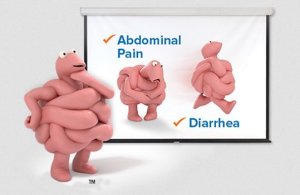
Disliked spots featured unappetizing topics or visuals, human ailments, made no detectable point, or were just stupid
AstraZeneca Opioid-Induced Constipation Envy, Squarespace Real Talk, SoFi Great Loans, Great People, Valeant Jublia Best Kept Secret, LG OLEG TV Man from the Future

PinkIntestine

Mtn Dew Kickstart PuppyMonkeyBaby carried the torch of 2014’s Doberhuahua, quite happy to spew the ridiculous in the craven quest for online buzz
– (by the way, it’s Mtn, not Mountain)

TurboTax_SuperBowl50NeveraSelloutEMBARGOEDFebruary7840pmET16

Some highlights:
– Anthony Hopkins’s perfectly executed tongue-in-cheek “I’m not selling out” pitch for TurboTax
Jeep’s spots (finally) taking advantage of its amazing legacy
Kia’s spot called ‘Walken Closet’ starring Christopher Walken. (Did the pun drive the copy?)

Key Peele

Some lowlights:
LG’s infuriatingly pointless waste of Liam Neeson and Ridley Scott’s talents
Squarespace’s infuriatingly pointless waste of Key & Peele’s talents
– Spots that required you to know the context (T-Mobile/Drake, T-Mobile/Steve Harvey, Hyundai Elantra/Ryan Reynolds)

A few spots had obviously high production values but were virtually ignored by reviewers – which makes one wonder if their $5 million+ was well spent:
Intel Experience Amazing, McDonald’s Good Morning, Bai Horse Whisperer, Pokémon 2.0, Wix.com Kung Fu Panda, Advil Distant Memory, Mobile Strike Fight

Finally, Weather Tech – this is I believe your 3rd Super Bowl ad.  You make a great product in an admirable way.  You are decent, hardworking, earnest people.
But maybe it’s time to step away from the cheese dip and have a beer.

weathertech

Click once or twice on the table below to make it more readable.

SuperBowl2016

Footnotes:
My evaluations are generally based on the Kellogg ADPLAN approachAttention
–Distinction
– Positioning
– Linkage
– Amplification
– Net Equity – – along with some personal gut feel.

Reviewers and links to reviews (if you were involved in any of the reviews and feel I got something wrong, let me know):
Kellogg Graduate School of Business – Northwestern University
Adweek
Ad Age
Chicago Tribune
Entertainment Weekly
New Yorker
Slate
USA Today
Variety
Washington Post
Wall Street Journal
Yahoo Sports

See you next year!

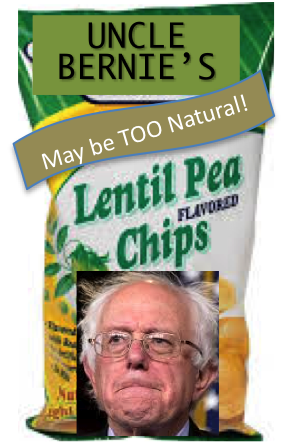
Donald Trump and Bernie Sanders are Bags of Chips

…and the other candidates are furniture.

There is a marketing lesson here; allow me to explain.

Everyone and their mothers and the horses they all rode up on have already weighed in on what’s driving the surprising dominance of Trump and Sanders in the polls to date.

Donald ChipsBernie Chips

The Armchair MBA looks at this as a lesson for marketers:

There is a clear difference between an impulse purchase and a considered purchase, demanding different approaches.  Depends on whether your goal is short-term or long-term (or maybe both).

  • Impulse purchases (like chips):
    – immediate consumption, no long-term commitment, low-risk, who cares
  • Considered purchases (like furniture):
    – longer-term implications, significant commitment, meaningful risk

As chips and as candidates, Donald Trump and Bernie Sanders present the most powerful, clearly articulated and differentiated propositions that are intriguing to a segment of the population.

With virtually no risk in trying a chip (or answering a poll), the chips (and candidates) that stand out as different are more likely to get early trial and short-term success.
Other chips (candidates) have less extreme claims, are consequently less differentiated, and thus any one is less likely to gain a majority of trial (poll votes).

Candidate Chips

After trial (polling), however, things could change.

Trump chips, while very spicy, might present an unexpected burning sensation after ingestion.
And Sanders chips, while appealing conceptually, might not be particularly palatable or affordable.

In both cases, these chips will still likely retain loyal users, but would likely represent a smaller niche
– as candidates, the same might also be true

Chips that may be designed for more long-term market success will necessarily be positioned to garner a broader share of the population and have staying power. While less overtly exciting, they may have a more balanced combination of ingredients and claims.

As election time nears, candidates become viewed less like chips and more like furniture: a longer-term commitment that demands (at least hopefully for most people) more thoughtful consideration, doing research, shopping, weighing benefits vs. cost and risks.

NET: For short-term impact (trial), claims must be clear and differentiated.

For longer-term success, both claims and performance must be carefully crafted to meet the needs of a meaningful portion of the population.

Barbie-Glam-Dining-Room-Furniture-Set

Hopefully our voting public exhibits at least the same care in choosing their candidates as they do in picking furniture.

NEWS FLASH: Burger King Learns About Unintended Consequences

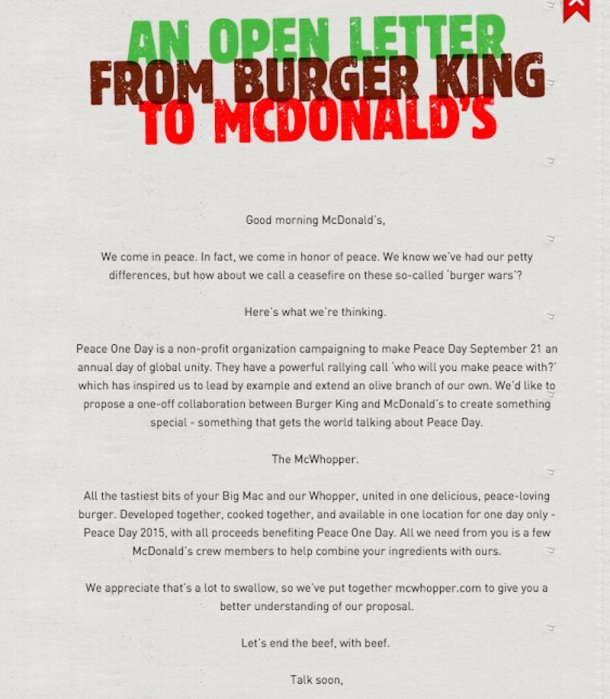
Last week Burger King ambushed McDonald’s with full-page ads in the New York Times and Chicago Tribune, suggesting the two chains combine forces with a one-time mash-up burger (the McWhopper), ostensibly to further the cause of World Peace.  McDonald’s CEO adroitly demurred via Facebook, suggesting there may be better ways to save the world.  This was covered by The Armchair MBA recently.

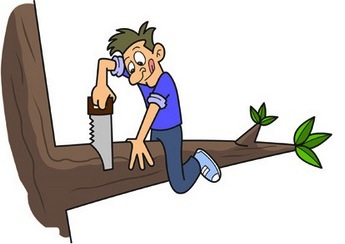
TreeLimb

BK’s goal seemed to be to bootstrap its profile inexpensively by forcing McDonald’s to publicly engage with a smaller competitor.

DennysBurger1

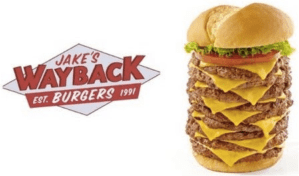
Now Burger King is dealing with smaller competitors trying to do the same thing to it.  Both Denny’s and Wayback Burgers (a 100-unit CT-based chain that features the ‘3 x 3’ —  a 9-patty burger) have reached out to Burger King, suggesting they would be happy to take McDonald’s place.

Wayback3x3

Denny’s took out its own tongue-in-cheek full-page ad in the New York Times, saying in part: “Hey @BurgerKing, We love the idea of a peace burger.  We’re just not sure what to call this thing.  Any ideas?  @DennysDiner

We have never heard of Wayback, and never considered Denny’s for burgers, so this seems like a great opportunistic play on their parts, driving awareness via media momentum initiated by someone else.

As for Burger King, while it hoped to trick the prom queen into a date, it is instead being asked to take its little sister to the movies.

Burger King Resorts to Crown-Foolery

Burger King Resorts to Crown-Foolery

Your faithful servant has been busy so this report is a few days delayed, but still worthy of mention.

As you may have seen, Burger King recently ran full page ads in the New York Times and Chicago Tribune, inviting McDonald’s to participate in the creation of a joint burger, the “McWhopper”, to be sold at one location for one day, with proceeds benefiting the organization ‘Peace One Day’ – on September 21 (Peace Day).

McWhopper Promo

The premise, according to the ad, is to “create something special – -something that gets the world talking about Peace Day”.

The old “Challenge the bigger guy and have him publicly acknowledge you” play has been used successfully in the past (Avis’s “We Try Harder” campaign, famously) – with benefits of generating free attention and leveling the playing field by being perceived as an equal.  Importantly, in the case of Avis, ‘Try Harder’ has everything to do with Avis’s point of differentiation.

Avis Try Harder

To anyone, including the most casual observer, this is not at all about world peace – – it’s just a clumsily transparent  attempt to lure a larger competitor into a PR trap. And in the end, with no apparent benefit for Burger King.  There is no link to Burger King’s point of advantage, and no apparent end game that links this activity to future profits.

One can imagine the discussion that precipitated this masterstroke campaign: “Hey – I read selected quotes from Sun Tzu ‘s ‘The Art of War” – – there’s one that says: ‘Hold out baits to entice the enemy. Feign disorder, and crush him.’ How about we publicly challenge McDonald’s to work with us on the biggest possible initiative: World Peace! (giggle). If they engage, we win – – they treat us as equals. If they shut us down (giggle), they look like a mean-hearted big corporation – – we win! This can only have a great outcome!” (high fives, then go for beers).

Well, like the infamous South Park underpants gnomes, Burger King envisions the first step (PR stunt), the end result (beating McDonald’s), but forgets the important in-between part (how can we translate this stunt to actual marketplace advantage?)

Let’s examine a few things:

  • Burger King is owned by 3G Partners, famous for hacking personnel and drastically cutting budgets – waging an actual media battle with McDonald’s is probably not on the table, leaving PR stunts as one of the few available tools (not counting, of course, improving the actual food)
  • McDonald’s has roughly twice as many outlets as Burger King, so it does not benefit by engaging
  • The amount of money generated by a one-day/one-outlet stunt is vapor compared to the cost of the ads that were taken out to announce it

In the end, McDonald’s quietly announced (via Facebook) that it was not interested, suggesting “a simple phone call will do next time”.

In this case, Burger King has used a derivative notion (World Peace? Really?) totally unconnected to a corporate advantage that might be leveraged (how about getting back to ‘flame broiled’?), and while it has generated some free media coverage, it also exposes itself as a mere prankster.

McDonald’s neither engaged nor totally ignored, it gracefully demurred, suggesting the companies try something that might make a real difference (how about reducing obesity?).

In the end, Burger King faithfully executes Sun Tzu’s strategy, except they neglected to figure out that pesky ‘crush him’ part.  Next time, linking the stunt to something the company actually stands for might be a better move.

Perhaps they mistakenly followed a different Sun Tzu strategy: “The whole secret lies in confusing the enemy, so that he cannot fathom our real intent.”