Author Archives: davetuchler

Anheuser-Busch: Guilty until Proven Innocent?

Posted on

Was it just a few weeks ago that Maker’s Mark made headlines when it reversed its plan to reduce its alcohol level by 3%?  Well, now Anheuser-Busch is expending resources to deal with a similar product quality perception situation; the difference here is that this story is not of its own making (Maker’s Mark had announced a planned change before changing their minds).

Social media and 24/7 coverage have made companies’ reputations more at risk than ever — and while it can take as little as a few well-placed keystrokes to ignite a PR firestorm, it often costs much more to avert or manage a crisis.

A-B Beers

A series of class action lawsuits has been filed in several states, accusing A-B of adding water to 10 of its beers, lowering alcohol content to a level below what is claimed on the label.  The lawsuits are reportedly based on information from former employees at the company.

The now not-surprising effect has been widespread negative buzz for A-B, which they have had to deal with immediately.  So far, A-B has denounced the lawsuits in a statement and posted test results and notes to their customers on Facebook and Twitter, as well as a full-page ad that ran today in numerous large newspapers.

BudweiserFacebook2

BudweiserFacebookA-B Watered Down Beer Lawsuit.JPEG-02312

Even this modest level of expenditure is no small potatoes for an issue that may well be 100% unfounded.  In fact, other companies caught in the same situation have spent significantly to manage the message (Taco Bell spent millions in 2011 to tell its side of the story when accused of mislabeling beef content, a suit that was eventually dismissed).  In the current climate of ‘post first, ask questions later’, when caught in this sort of negative story, companies are often well-advised to react immediately and with strength – – regardless of what the facts may eventually bear out.  The alternative is to passively let the brand message be controlled by social media, which is not really an option.

These days, brands would be wise to budget some contingency funds to deal with the possibility of such a media-enabled drive-by.  In fact, it could be argued that Anheuser-Busch should be more aggressive now to get ahead of public perception.  It would not be surprising to see them dial up the spending in the near future.

Nigel has just very astutely asked me: what happens if they’re actually found guilty?  Well, if that happens, as Anheuser-Busch InBev has a market cap of around $150 billion, it wouldn’t be long before the company feels pain the billions rather than millions.  That’s the difference between being accused of doing something bad, and actually doing something bad.

Google Glass: Half Empty or Half Full?

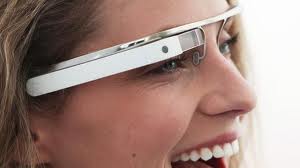
The last few days have seen a mini-avalanche of commentary about Google Glass, a wearable ‘augmented reality heads-up display’, hotly anticipated for a late 2013 launch (at around $1500).  As an early indicator of potential social impact, there are quite a few spoofs already out there.  But what is it, and what are we to make of it?  I will confess that I started out a skeptic (more on that later) but am now warming to the idea — but that it still has a ways to go.GoogleGlass

The simplest way to describe the benefit of Google Glass is that it’s a way to get the benefits of various functions of a smartphone, without the disruption of a smartphone — mainly the need to use hands and divert attention to look at a screen.  This headset will allow user-perspective photos, videos, maps and short visual messages, all voice-controlled.

An excellent short slideshow about Google Glass functionality can be found here.

Google has released a video showing fabulous user experiences being recorded:  hot-air balloon flight, trapeze, onstage at the ballet, stunt pilot, skydiving, roller coaster, etc.

Exciting but a little breathless – – like the old joke about the little girl who wants feminine hygiene products for her birthday because they will let her ride horses and go to the beach like in the commercials – – most of the excitement is from the activities, not the device.

Another more (literally) pedestrian video shows a guy walking around Manhattan, continuously taking care of business using Google Glass heads-up info, seemingly enjoying his surroundings (cue gratuitous dog interaction) while simultaneously (and impressively) managing to not fall into a manhole.

This video was more interesting: it showed how it would feel to be continually engaged with the device – – but the texting-while-driving argument seems relevant here – – can we safely (and do we want to) ignore our surroundings as we focus on interacting with a device?

Google Glass has some obvious disadvantages.  It is still a little space-age nerdy (although talks are apparently in the works with RayBan, Warby Parker and others), and still likely subject to the frailties of technology (dropped signals, etc).  It also seems to have the capacity to depersonalize interpersonal human interaction when one (or both) parties are assisted by (and perhaps secretly distracted by) the unseen notes popping up in their heads-up display.

StarTrekGlasses

On the other hand, Google Glass embodies the remarkable promise of current hi-tech innovation.  Rather than require humans to adapt to technology (think about having to learn DOS commands), it strives to adapt technology to natural human behavior to make life more functional and interesting.  By this measure, Google Glass, by removing the need to constantly manipulate a phone, succeeds in creating a big vision – – but the big question still remains – – who is going to want to wear this thing?

Marco Rubio and the New Watergate: Missed Opportunity

These days it’s simply not good enough to have a token effort at social media – if you’re in, you need to be all-in.  A recent column by Kate McMahon on MorningNewsBeat (below) summarizes it nicely, using the recent case of Marco Rubio and comparing Poland Spring’s inaction to Kraft’s opportunistic action for Oreos during the Super Bowl (instantly creating and Tweeting a catchy message during the blackout).

MarcoRubioWater

Oreos Super Bowl

The new imperative is not just to manage your followers in real time, but to take advantage of the ability to jump on opportunities real-time, as they present themselves.  So there’s a defensive reason (manage potential crises proactively) and an offensive reason (take quick advantage of spontaneous good luck by leveraging through social media).

The full text and link to Kate’s commentary is below.  By they way, MNB is a great quick digest of a variety of consumer and retail issues, every day.

http://www.morningnewsbeat.com/Home/Home_S.las?Date=2013-02-20&Source=Newsletter&A=41188&C=#A41188

——————-

Kate’s Take: Drip, Drip, Drip

by Kate McMahon

Welcome to Watergate 2013.

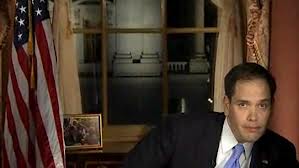
We are referring, of course, to Florida Sen. Marco Rubio’s awkward lurch for a bottle of Poland Spring water and subsequent slurp during his Republican rebuttal to the president’s State of the Union address last week.

Within minutes the Twitter universe lit up with #watergate tweets, and social media watchers anxiously waited for Poland Spring to capitalize on its prime-time product placement moment.

And waited.

And waited.

Even Rubio himself good-naturedly tweeted a photo of an empty Poland Spring bottle right after the speech and has since parlayed his guzzle into a $125,000 boost to his campaign PAC coffers through the sale of Rubio water bottles (certainly abetted by a “Saturday Night Live” spoof).

But as the hours ticked by, and the gulp was replayed on newscasts, parodied on YouTube and the talk of Twitter, Poland Spring remained radio silent.

When contacted the next morning a spokesperson said: “I haven’t seen what’s going on on Twitter.”

Not an acceptable response, particularly for the top-selling spring water brand in America, owned by the multi-billion dollar international conglomerate Nestle.

And finally at 1:20 p.m. Poland Spring weighed in with a Facebook post showing a tiny Poland Spring bottle looking at its reflection in a mirror with the caption: “Reflecting on our cameo. What a night.”

Witty, yes, but way too late. The headlines that followed shouted “squandered,” “missed opportunity” and “fumbled.” The Huffington Postcompared the 14-hour lag to “roughly 14 years in social media time.”

Turns out Poland Spring stopped posting on its two Twitter accounts as of July 2010 and January 2011, respectively. Really?

The lead-footed response had the bad luck to follow a timely moment of social media marketing by Oreo during the Super Bowl blackout. Oreo was already in the game with a commercial, but tweeted “Power Out? No Problem” and a picture of an Oreo with the caption “You can always dunk in the dark.”

(Tide also sent out a tweet saying “We can’t get your blackout. But we can get your stains out” and Walgreen’s chimed in with “We do carry candles” but it was Oreo that got all the attention.)

In fact, the Oreo tweet was retweeted 10,000 times in one hour and lauded as the advertising winner of the night.

And it illustrates the phenomenon that major nationally televised events are essentially “two screen experiences” – what people are watching and what they are tweeting simultaneously.

Since Oreo had a commercial airing during the Super Bowl, cookie execs and its ad agency team had gathered in a “mission control center” to watch the game and monitor social media channels.

With all the key players on hand, they were able to design – and get approval for – a witty graphic within minutes.

Granted, Oreo had a multi-million dollar investment in the Super Bowl telecast and Poland Spring had no way of knowing its product would capture the nation’s attention, thanks to a parched freshman Republican from Florida.

But the two cases illustrate that real-time interaction with consumers on social media is dictating the discussion. If you aren’t prepared to join in, you will find yourself left high and dry. 

Comments? Send me an email at kate@morningnewsbeat.com .

Maker’s Mark: We all make mistakes, here’s a great example of how to handle it

BULLETIN:  Management listened! (and acted)  Good for them!

Screen Shot 2013-02-17 at 7.38.21 PM

Very recently Maker’s Mark made the news by announcing a reduction in alcoholic volume from 45% to 42% (otherwise known as diluting).  This commentator (and more importantly, consumers) questioned the wisdom of the move, which Maker’s Mark explained as necessary to meet demand.

Today (Sunday) Maker’s Mark announced via Facebook and Twitter that they have reversed their earlier decision and are keeping the product as is.

We applaud management for acting quickly and decisively based on consumer input.  The response has been immediate and positive – – already there are 24,000 positive comments on Maker’s Mark FB page.  They have turned a negative into a positive and reclaimed the loyalty of their customers.

You can go to their site for the full announcement.  Below is an excerpt.

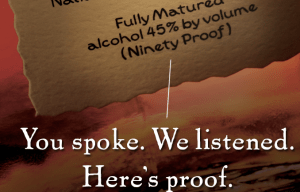
You spoke. We listened. 

Dear Friends,

Since we announced our decision last week to reduce the alcohol content (ABV) of Maker’s Mark in response to supply constraints, we have heard many concerns and questions from our ambassadors and brand fans. We’re humbled by your overwhelming response and passion for Maker’s Mark. While we thought we were doing what’s right, this is your brand – and you told us in large numbers to change our decision.

You spoke. We listened. And we’re sincerely sorry we let you down.

So effective immediately, we are reversing our decision to lower the ABV of Maker’s Mark, and resuming production at 45% alcohol by volume (90 proof). Just like we’ve made it since the very beginning.

Maker’s Mark: Missing the Mark

I know absolutely nothing about bourbon, but even I have to comment on what appears to be a classic case of unintended mixed messaging (and perhaps short-sighted judgment), that may likely have a huge negative impact on a classic brand.

Maker’s Mark is a venerable premium bourbon whisky, taking 6-8 years to make.  It even has an Ambassador’s program of people who enthusiastically and voluntarily evangelize the brand.  It is a unit of Beam.

MakersMarkRecently Maker’s Mark, in dealing with a ‘bourbon shortage’, announced that it would permanently reduce from 45% ABV (alcohol by volume) to 42% ABV, in order to be able to fulfill growing demand.  There is no change in price.  USA Today has a good commentary – you can find it here.

Maker’s Mark management explains this formulation change in the language of alcohol reduction, in order to ‘extend supplies’. But it didn’t take long for the public (and press) to explain the change as dilution, and the motivation reinterpreted as being profit-driven (as opposed to consumer-driven).  Additionally, MM management stated that the new formulation was tested with MM users who ‘couldn’t tell the difference’.  (apparently this taste panel was MM employees).

We live in an increasingly transparent world – why would this explanation create issues?  Well, several reasons, dealing with both the communication as well as the decision itself.

1) Don’t mess with my product.  Consumers are extremely sensitive to, and skeptical of, any sort of formulation change.  Loyal users, remember, are loyal because they’re happy with the product as is.  Any stated change, even a purported ‘improvement’, is almost by definition a change for the worse.  New Coke was over 25 years ago but the lesson holds now more than ever.  In addition, by clearly stating there will be a reduction in alcohol content, MM is in effect saying we’re compromising one of the core elements of the product.  In this case, not only different, but clearly worse.   This fundamentally hurts this premium brand’s value.

2) Perception is reality – – even if there is no noticeable change (and that’s a little doubtful), the fact that consumers know they’re drinking a diluted product will give them the perception that it’s not the same.

3)  Don’t violate my trust.  This is even more pronounced in a luxury category like whisky, which is extremely personal, one’s choice is both a badge and source of pride, and where there is a greater than average emotional connection between user and brand.  Any attempts to disguise or cleverly position product changes will be seen as a betrayal and will undermine loyalty in a hurry.  Again, the brand will suffer.

4) Beware ‘small unnoticeable changes’.  I once heard incremental product changes explained this way:  You can start with a Snickers bar and remove a peanut every year; not noticeable but one day you’ll wake up with a Three Musketeers.  The fact that Maker’s Mark used an internal panel fails in two ways:  a) this is no substitute for actual quantitative testing with consumers and b) it smacks of breathing one’s own exhaust — I can just imagine the action standards that were set.

5) Don’t ignore the power of social media.  Reaction, judged by comments on Maker’s Mark FB page, is decidedly negative, most in the ‘betrayed’ or ‘I’ll never use this brand again’ category.  The Chairman’s response/comment, which was tweeted recently, can be found here.  But to the extent that this defends their position rather than acknowledging negative consumer responses, sounds a bit like the Applebee’s fiasco.

In the end, the market will be the ultimate judge.  But in a) diluting a premium product in the first place and b) being aggressively transparent with a negative message, Maker’s Mark may have unwittingly lost in the long run.

Faced with a shortage (of bourbon or profits), Maker’s Mark may have been better off with a modest price increase (not optimal but would reinforce the premium image), and then taking the opportunity to promote its shorter-lead-time new products (Maker’s 46 and Maker’s Mark White) while core MM capacity is built.  In any case, perhaps in this case it would have been better to soft-pedal a quality change in the core product.

Where is the Olympic brand going?

Wrestling was just eliminated from the 2020 Olympics by the International Olympic Committee.  What?  And golf and tennis are included?  Apparently wrestling was odd man out – 26 ‘core’ sports vying for 25 spots, and the criteria included things like television ratings, ticket sales, anti-doping policy and global participation and popularity.

wrestling

—>  Why should we care?  Why should the Olympics care?  The Olympic credo is ‘Citius, Altius, Fortius‘ –  Higher, Faster, Stronger – – and the Olympic brand had come to mean a way to settle the ancient traditional arguments about who’s the fastest man, who’s the strongest man, etc.  Over the years, the Games tried to hew closely to this idea, but inevitably had to adapt to survive, most importantly becoming gender-equal, but also bowing to media-driven economics by adding sports that would be unrecognizable to Baron de Coubertin (e.g. beach volleyball, BMX cycling) but that appeal to a target demo.  One of my earlier posts lamented the reinstatement of golf to the 2016 Games (it was an Olympic sport in 1904), because along with tennis, there are already ample opportunities annually to decide the top athletes in these sports, and that they would necessarily crowd out something else more worthy of the Olympic spotlight.

—> Wrestling is now just one of an at-large list of candidates including roller sports, sport climbing, wakeboarding and wushu that will apply for participation in 2020.

—> Perhaps we’ve reached a tipping point.  With this move, the meaning of the Olympic brand becomes less clear.  While it originated as the indisputable contest to crown the world’s best in the basic athletic skills for the following 4 years, as it gradually sheds its legacy and chases ratings, it now seems on its way to becoming another (albeit very large) global media/entertainment extravaganza.

JCPenney markdown sale: In this corner, Brand Strength…and in the other corner…

Readers of this blog know that I am a strong believer in the power of brands.  How else, in one or two words, can a rich set of expectations, promises, emotions and attributes be powerfully and instantly telegraphed?

Think of what immediately comes to mind, for better or worse, when you hear brands like REI, Whole Foods, Apple, JC Penney, Disney, The Republican Party, or Trabant.  Brands are living representations of the customer experience, at all touch points, and need to be carefully watched and managed.  Ok, we knew this already, right?  Of course.

Well, this morning I ran across 2 things that seemed to contradict each other.  But the takeaway point is, there is another powerful influencer that can undermine or overwhelm the power of a brand – – VALUE.

Thing 1) A soon-to-be-released study from the Grocery Manufacturer’s Association reveals that only 41.7% of consumers claim that price is ‘very important’ in food shopping.  Also, for the first time in recent memory, less than half of consumers (49.1%) say items on sale/money-saving specials are “very important.”  What does have influence?  Service, expertise, guidance.  You can read a preview here).

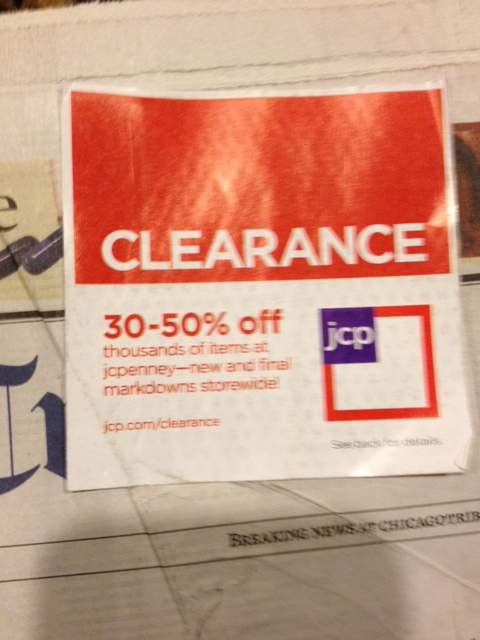
Thing 2) My morning paper had a blow-on sticker advertising a clearance event at JCP.   If you’ve been following, the brilliant merchandiser behind Apple Stores’ success, Ron Johnson, has taken over at JCP with a philosophy of weaning deal-crazed consumers, through elimination of promotions and investment in store upgrades.  The reaction from the Street and the media tells us that his job is not quite done yet.  (and the sticker is Exhibit A.)  A good NYTimes overview here.

jcpSo what is the point?  These 2 observations would seem to be contradictory.  In one, consumers are telling us they don’t focus on just price; in another, evidence that consumers are stubbornly insisting that price matters.

The point is that brand strength is absolutely important, but is in the end one of several interconnected purchase influences, all of which direct the final decision.  An exceptionally strong brand like Apple, representing a unique product/service that is not available elsewhere, can drive purchases among consumers even if it’s not the most economical.  Apple has earned this strength through its excellent offerings (including the retail stores), although the Samsung brand now seems to be on the ascendance through its own innovation.

JC Penney, on the other hand, is a brand that claims strong awareness, a seemingly consistent image (retailer of good value, good quality products), but is not unique in the market.  There are substitutes everywhere and the JCP brand is not enough to compel purchases.  Thus, when faced with elimination of expected discounts, consumers are happy to vote their dollars elsewhere.

I admire Johnson’s goal with JCP; perhaps rather than rallying disproportionately around the ‘no discounts’ flag, more of the investment (and messaging) could be directed toward what grocery shoppers look for:  Service, expertise, guidance, and maybe things like selection.  (although I’m no retailer).

The clear lesson – all brands need to be carefully assessed and business strategies molded around the strengths and weaknesses revealed.  No brand is so strong that it is a replacement for delivering clear value.

Product Life Cycle Management: What do a cyclist, a horsewoman and NutraSweet have in common?

No, this is not a joke.  So what do they have in common?   Answer: a strategy that focused on optimizing profits in the moment.  At least one had a thought-out exit strategy.  Can you guess which one?

There is a lesson here about understanding your product’s practical lifespan.

Let’s examine the players.

The Cyclist — Lance Armstrong

By now we’re all very familiar with Lance’s story – – cancer survivor, fundraiser extraordinaire (almost $500 million), of course winner of 7 Tour de France titles, since vacated due to his now-confessed use of PEDs.  Ironically, prior to his cycling fame, Armstrong was a world-class teenage triathloner, and if he had remained clean it’s likely he would still have been world class in triathlon or cycling.  Of course, now we’ll never know.

Young Lance

The relevance?  Post-cancer (and by some accounts before), Armstrong decided that he would pursue world cycling dominance at all costs.  Success required use of PEDs, intimidation of colleagues, and repeated lying.  But during that time, it paid off handsomely — Armstrong was estimated to have earned $20-30 million annually during the roughly 10 years that he dominated, so perhaps $300 million, not counting the fame and celebrity.  His worth is currently estimated at $125 million.

Lance A Foundation

The exit strategy?  Whether Armstrong expected this ride to end well is unknown; increasingly it seems that he didn’t actually give much thought to his exit strategy and in fact just put his head down and worked to get the next title that he was seeking.  What is clear is that the gravy train has now developed into a bad case of road rash.  Including his volunteered restitutions and lost future endorsements, it’s estimated that he has lost $200 million of future earnings, and it is not clear what the nature of his future will be.  But he is still young, 41, and while he may have difficulty along the way, it’s possible he can re-establish public support.

So – he went all-in for success, and achieved it at the cost of longer-term viability.  A medium-length life cycle with a sharp drop-off.  Worth it?

The Horsewoman – Rita Crundwell

If you live in Illinois you know the story – – the long-time comptroller of little Dixon, IL (pop 15,000) was found to have embezzled over $53 million from the town over 22 years (!).  Crundwell continued this deception for years and stopped only when she was caught.  The ill-gotten gains were used to support a lavish equestrian lifestyle, including among other things an 88-acre estate and ranch, 3 additional homes, over 300 champion horses and a $2 million RV.   After her arrest, Crundwell faced certain loss of all of her possessions as well as as up to life in prison.  An excellent account is here.

Crundwell 1

The exit strategy?  In November 2012, rather than drag the state through a long and expensive trial, Crundwell pled guilty to embezzlement and wire fraud and faces up to 20 years in prison.  Sentencing is in February.  In this case, realizing that she successfully made hay while the sun shone, Crundwell has taken as close to the high road as is possible, and has gained some measure of respect for it.  But she’s still going to jail for a long time.  Worth it?

Crundwell 3

NutraSweet

NutraSweet, the brand name for the sweetener aspartame, was a much better tasting product than its predecessor saccharin, and supplied the missing link that enabled diet sodas to finally go mainstream, a huge profit machine for the soda makers.  Its introduction strategy was as innovative as its taste, and set the bar for future branded ingredient launches (such as Intel Inside).

At launch, NutraSweet was priced at a high multiple of saccharin, and required that customers put the then-unknown NutraSweet swirl logo on the front panel of their famous products.  In exchange, NutraSweet spent as much as $50 million annually to promote the brand, driving awareness and consumer demand for its customers’ products.  Customers, which included Coca-Cola and PepsiCo, had no choice but to agree to NutraSweet’s terms, but did so grudgingly.  In fact, NutraSweet purposely pursued a strategy that ensured at best a cool relationship with each of its major customers.  An excellent NY Times account can be found here.

diet pepsi

Why the unconventional take-no-prisoners approach, counter to the typical goal of generating customer loyalty for the long term?  Well, NutraSweet knew exactly what its sell-by date was:  December 1992, at which point the patent on the aspartame molecule would expire and lower-cost producers would enter the market.  (and in fact, this has happened – – at its peak NutraSweet sold for $150/lb; it is currently around $5/lb.).  There was no long term.  NutraSweet management, with essentially a one-product portfolio, decided that the aggressive pricing strategy maximized overall profits.  This seems to have been the right move – – NutraSweet was remarkably profitable during its lifespan, and the market has demonstrated that trying to retain customers post-patent at premium pricing would have been difficult at best.

The lesson?

Managing a product’s life cycle is about maximizing net present value of future profits.  This in part means understanding the expected premium that a product can command over its lifecycle, based on advantages vs competitive offerings, and managing pricing, promotion and product improvements to realize this premium. When a product can no longer produce an acceptable profit, it is time to sunset or adjust the strategy (reducing investment, etc).

Lance Armstrong certainly had an extremely powerful brand for a good number of years, and maximized profits over that time period.  However, he didn’t seem to envision any consequences of his maximization strategy and therefore has shortened his own marketability life cycle.  Said another way, he killed his own golden goose.

Rita Crundwell also maximized profits over a significant time period, and clearly did nothing to change things.  It is likely that she fully realized that when her marketability life cycle ended it would be irretrievably over, which led to her pleading guilty.

NutraSweet assessed its profitability life cycle very early, as part of its pricing/marketing strategy, and stuck to its strategy successfully.  And while the logo has essentially been retired, it stands as one of the more innovative, and profitable, chapters in marketing history.

Net, managers need to carefully assess how a product’s pricing power may shift during its lifecycle, and plan pricing and support appropriately to maximize profits.

Would you prefer pink slime or horsemeat with your burger?

Well, neither, actually, thank you.  If you’re talking about things that we’d rather not see in our food, you can add melamine to the mix.  All three caused quite a commotion when stories broke revealing their presence in the food supply.

In that respect they have similarities; in other ways they couldn’t be farther apart.  In all cases, the media played a key role.

First, a brief recap (if you’re up to speed, skip to the meat of this post below).

Melamine – – an organic compound, used to make familiar things like Formica, dinnerware, laminate flooring, and white boards.  Melamine also is toxic, and can falsely indicate high protein content in foods.  These characteristics came together with tragic consequences in 2007 and 2008, when Chinese-sourced infant formulas and pet foods that had had their protein counts ‘boosted’ with melamine led to six infant deaths and hundreds of thousands of injuries, as well as a lot of killed or harmed pets.

Melamine mom

Pink Slime – – known more commonly in the meat biz as Lean Finely Textured Beef (‘LFTB’), is ground-up low-grade meat byproducts that has had the fat removed, and was approved in 2001 for use as a filler at up to 25% of ground beef content.  In 2012 a scandal arose when it became known that as much as 70% of the ground beef sold in the US contained LFTB but was not required by the USDA to be identified on labels.  While not posing any health risk, public outcry focused on the fact that with no label disclosure consumers were not able to make informed decisions.

pink slime

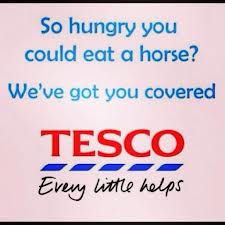
Horsemeat — just this week, An Irish meat processor recalled 10 million burgers from supermarkets across Ireland and Britain amid fears that they could contain horsemeat, a discovery that poses no danger to public health but threatens to harm Ireland’s important beef business.  While the concept of horsemeat is not particularly appetizing to a US culture that idolized Seabiscuit and Mr. Ed, apparently that’s not a universal feeling.  In fact, according to Food Manufacturing, “much of Europe happily consumes horsemeat as a delicacy.  Still, ‘The Irish are known for their respect of the horse, and they’re not used to eating horses,’ the French newspaper Le Figaro explained Wednesday to its readers.”

tescoscared horse

How are these three things similar?   Easy:  with all of them we were served a nasty surprise regarding our food, which is never going to go down smoothly.

How are these different?  Well, in a few ways.

1) Benefits/Dangers – – Melamine is toxic, period.  It provides no benefit in food other than to increase profits for the producer.  LFTB is clearly not harmful, although it has less protein than the beef it replaces.  On the other hand, it helps reduce beef’s fat content, which is good, and can help reduce retail prices of ground beef, a benefit generally appreciated by consumers.  Horsemeat is similar to LFTB in that it is not harmful, but in this case it seems to have been secretly added to ground beef solely in an effort to increase profits.

2) Outcome of the scandal – – Melamine – – boycotts of Chinese products worldwide, 21 convictions, including 19 long sentences and two death sentences in China.  On the plus side for consumers, it has led to longer-term enhancements in food supply chain testing and security.  LFTB – – as a result of the media frenzy, several beef processors went bankrupt, eliminating thousands of jobs and driving higher prices at the shelf.  Horsemeat — still unfolding.

melamine china

3) Role of the media — with melamine, the media was essential in uncovering the scandal and demanding quick action and accountability.  With LFTB, the media seemed less interested in pushing for the public good than in fanning hysteria (and circulation) using the irresistible ‘pink slime’ nickname.  Certainly without that name there would have been far less outrage.  With horsemeat, the media is somewhere in between – – apparently staying mostly objective and reporting the facts, so far.

slime headline

What is the meat of the matter here?  What are lessons for producers and retailers?

–> With the broad footprint of upstream suppliers and the highly dispersed market for downstream finished products, there can be no such thing as too much supply chain traceability and security, and with access to the right information, consumers will increasingly be willing to pay for safety.  Manufacturers and retailers have a potential danger in the event of an ingredient scare, but also an opportunity to use traceability and source of supply as differentiating advantages, by simplifying sourcing, and investing in supplier audits and shipment tracking automation.

food supply chain

–> Consumers will continue to demand transparency regarding what’s in their products.  Manufacturers and retailers will need to increasingly provide it to stay competitive.  To some extent this is not easy; research shows that consumers often have a knee-jerk reaction to the sound of an ingredient (e.g. ‘pink slime’) without bothering to know the facts.  But pink slime is a very obvious example; there are more subtle perception dangers even with very useful ingredients (propionic acid is naturally occurring and helps prevent bread mold; alpha tocopherol is just another name for Vitamin E; and ascorbyl palmitate is an antioxidant and nutrient; etc.).  Claims like GMO-free can provide a marketing benefit but can also generate significant added costs.  Country of Origin Labeling (COOL) is a great concept but can get murky depending on where a product is grown, processed or packed.  Net, providing transparency is a worthy goal but it is still very tricky and will require ongoing management.

ingredient line

–> Social media has helped create a situation where consumers act immediately on rumors and don’t want to wait for facts, which puts all producers at greater risk of a Pink Slime-type incident.  In some ways, this is a risk that is hard to mitigate.  The best advice would be twofold:  1) err on the side of greater disclosure of ingredients so the message can be proactively managed; and 2) in the event an ingredient issue surfaces, use the same social media to immediately acknowledge the problem, present the facts, and communicate what the company is doing about it.

twitter panic

–> The media must remember that with its power comes a responsibility to maintain objectivity, balance and context in reporting the news.  A pink slime-type episode, where sensationalism trumps perspective, can make for interesting copy, but can also have real consequences for real people.

wendys finger

What my dog taught me about Twinkies

What, you ask, can my dog Nigel teach us about Twinkies?  A lot – what’s a brand worth, that sort of thing.  This question is brought to mind by yesterday’s purchase of now-bankrupt Hostess Brands’ bread portfolio (including Wonder Bread, Nature’s Pride and others) by Flowers Foods.   Sale of the Hostess dessert cakes brands (including Twinkies, Ho-Ho’s, Yodels, Suzie Qs and more) is expected to close within a few weeks.

IMG_0435

Well, Nigel is pretty bright, and he does provide perspective on the recent public agonizing over the potential disappearance of Twinkies.

You see, Nigel goes crazy for the ball when the humans play ping-pong at home.  After he beats us to a missed ball, he happily gives it up so the game can continue.  It seems Nigel loves the idea of having the ball in his mouth but doesn’t have much interest in chewing or eating it.  He likes the idea of the ball, not the ball itself.

In the same way, while many of us are emotionally attached to our experiences with Twinkies, and share in the grief of possibly losing them, it is unlikely that many of us are actually current Twinkie eaters or likely to suddenly become future eaters.

Twinkies is a powerful brand that is high in nostalgia (positive associations driven by past exposure) but unfortunately also one that has become quite low in relevance.  In an age where treats are increasingly either relatively good for you (e.g. 100 calorie packs) or utterly indulgent (e.g. gourmet cupcakes), and where consumers increasingly check ingredients, that retro golden sponge cake with vanilla creme filling is being squeezed from all sides.  Past efforts like reduced-fat Twinkies (of which I was a fan) or chocolate creme or banana Twinkies have generally not been successful – – they violate some aspect of the indulgent formula of the original.  So while the brand carries significant weight, the ability to convert that equity into cash is not a slam dunk — Twinkies loyalists are a particularly finicky (and shrinking) lot, and it’s not clear that there is a consumer franchise for the future.

What is the lesson?  Just because a brand is widely known and loved, doesn’t mean it can power future sales.  The winning bidder for the well-known Hostess snack brands will need to have assessed not only the net present value of the current franchises, but also the ability to extend these brands beyond current offerings to become more relevant to an audience that will generate long-term demand.

The successful repositionings of Old Spice and Cadillac from Dad targets to Son targets demonstrate that it’s very possible to recharge relevance, capture a new audience, and thus harvest latent equity.  The unsuccessful (and clumsily transparent) attempt to resuscitate Oldsmobile (remember?  “It’s not your father’s Oldsmobile“) shows that there are no guarantees.  Kentucky Fried Chicken’s attempt to recast itself as less unhealthy (KFC) would probably be judged to have had moderate success – – the word ‘fried’ is decoupled from the brand, but we all know what goes on in there so there’s a limit to how far you can (and want to) go.

NostalgiaRelevanceTwinkies carries immediate and powerful associations and there are certainly potential avenues for the brand — perhaps traditional line extensions, perhaps co-branding, perhaps licensing the Twinkies brand aggressively to non-food products (clothing?  toys?  theme park ride?). The new owner will very carefully need to determine whether, and how, the brand that elicits such strong emotions might generate sufficient profits to justify the purchase.

To a great extent, it may depend on whether this old dog can learn new tricks.