Category Archives: Marketing Strategy

What Jimmy Buffett Taught Us about Marketing

A lot of people today are remembering the late Jimmy Buffett, who created a genre and was by all accounts one of the good guys in show business.

FILE – Jimmy Buffett performs at his sister’s restaurant in Gulf Shores, Ala., on June 30, 2010. “Margaritaville” singer-songwriter Jimmy Buffett has died at age 76. A statement on Buffett’s official website and social media pages says the singer died Friday, Sept. 1, 2023 “surrounded by his family, friends, music and dogs”. (AP Photo/Dave Martin, File)

I am not a Parrot Head, but I am quite familiar with Buffett’s music, centered mostly in the period (late ‘70s) where he hit his stride and established his unique and enduring style. 

Apart from the music he created, Buffett was also a remarkably astute businessman, over the years amassing wealth recently estimated at around $1B, during which time he was probably mostly wearing flip-flops.

It becomes apparent that this guy knew what he was doing, so with all due respect and a tip of the Panama Hat, here are a few things we can learn from Jimmy.

Be alert to what’s working, embrace the unexpected, and adapt to create your niche
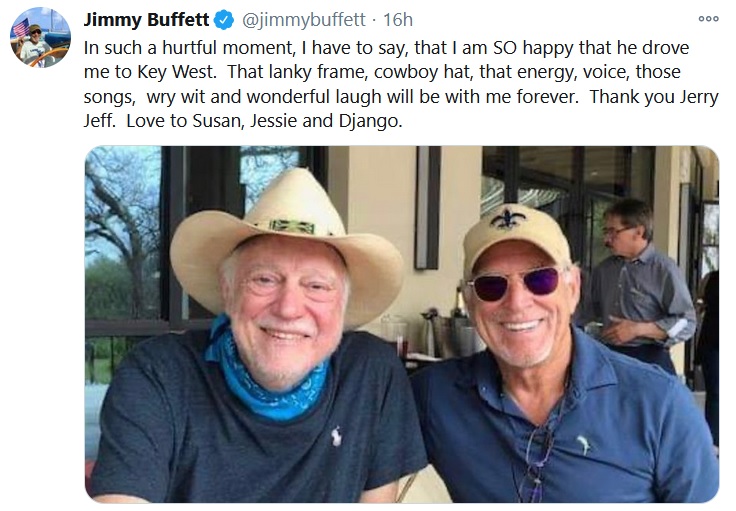
Following Jerry Jeff Walker’s death in 2020
  • Growing up on the Gulf Coast, Buffett spent time with his ship captain grandfather, and learned guitar in college just as a way to attract women.  He moved to Nashville in the late 1960s and worked for Billboard magazine while working on his music.  His first record (Down To Earth, 1970) was more Country than anything (because, Nashville) and even though it sounds musically like a lot of his later work, was a relatively unremarkable first effort.
  • Then, somewhat randomly, outlaw country artist Jerry Jeff Walker took Buffett to Key West, Florida.  It was there that Buffett mashed up the laid-back beach scene, Caribbean influences and the classic country music requirement of a great story in a unique way, and created his niche, which he sometimes called ‘Drunken Caribbean Rock ‘N Roll’.
  • When his sophomore effort ‘A White Sport Coat and a Pink Crustacean’ came out in 1973, the Buffett brand was started, and he never looked back. Margaritaville, which came out in 1977, cemented his brand.

LESSON:  Me-too is no fun.  Not everything in life can be planned. Figure out what about your offering is both unique and appealing, and be flexible on who the target is.  We all know that Buffett did not build his success among Country music fans, even though that’s what he originally was going for.

REALLY understand your brand

  • Jimmy Buffett wrote a lot of great songs, but what created passionate fans was not the music itself (they’re mostly pretty straightforward), nor the lyrics (although he tells great stories).
  • What was unique about Buffett was how the music made his audience feel.  This is about relaxing, parking your troubles for a while, and enjoying life with other people.
  • Everything Jimmy Buffett did (songs, concerts, etc.) was in service of generating this laid back, good time feeling.  That is why people bought the albums and went to the concerts.  It’s not Progressive Rock; it’s a 6-string guitar, maybe some pedal steel or steel drums, and having fun.
  • Buffett toured aggressively, because he understood that it was all about the experience.  His tours generated more revenue than his record sales.

LESSON:  The more you can understand why people gravitate to your product or service, the better you can do in not only offering more of the same, but also positioning and marketing what you do.  Ultimately, it’s not always about tangible features, but how it makes someone’s life a little better or more fun.

Extend your brand opportunistically, but thoughtfully

  • Besides his off-stage exploits in acting, directing, writing novels, composing soundtracks, and being a conservationist, Buffett was very busy and very successful and disciplined in staying on-brand in his business ventures.
  • The following is just a partial list:
  • RestaurantsMargaritaville restaurants, Landshark Bar & Grill, Cheeseburger in Paradise restaurant
  • Food and BeverageMargaritaville Tequila, Margaritaville Foods, Landshark Lager
  • Entertainment: Margaritaville Casino (in Atlantic City NJ), Margaritaville Online video game
  • Music production: Margaritaville Records
  • Retirement livingLatitude Margaritaville, large senior living communities in progress or planned in Daytona Beach, Hilton Head and Panama City.  (at some point Buffett realized that his audience was pretty close to him in age).
  • Last but not least: Coral Reefer brand marijuana and vape products, and Margaritaville Footwear (trigger warning: it’s not just flip flops!)


LESSON:  if you’ve got a strong product or service offering, isolate what makes your product popular and apply it in other areas to generate growth – but just make sure that the thing that makes the original offering popular also translates to extended offerings.

A lot of people who hadn’t listened to Jimmy Buffett in years (or decades) are missing him now – – because of an appealing state of mind that he offered.

A great example of the most basic of marketing rules: 

Be unique if you can, understand your brand, and stay on brand.

Revolutionary VR and AI Technology Enables MLB Opening Day at Home for All Teams Simultaneously*

Posted on

On March 30, 2023, Major League Baseball did something unprecedented: they held all the opening day games as virtual reality events. Yes, that’s right, every single team got to play their home opener in their own stadium, without having to leave the comfort of their own homes. How did they do it, you ask? Well, it was all thanks to the magic of VR technology.

You see, each team’s stadium was recreated in stunning detail in the virtual world. Fans could log on to their team’s VR channel and be transported to their favorite team’s home field. They could even choose their own seat, just like they would in real life, and feel like they were really there. But the best part? No more expensive tickets, long lines for concessions, or having to deal with rowdy fans. It was like the ultimate baseball experience without any of the hassle.

Virtual rendering of Orioles Park at Camden Yards (source: Virtual Backgrounds)

Of course, there were a few hiccups along the way. Some fans accidentally logged into the wrong channel and ended up watching the wrong game. Others struggled to adjust to the VR controls and found themselves accidentally teleporting onto the field. And then there were the players themselves, who had to adjust to playing in front of empty stands, with no crowd noise to feed off of. Some players even admitted to feeling a bit lonely without their usual home crowd cheering them on.

Superstar Bryce Harper helps a fan adjust to the new reality (Source: USA Today)

But overall, the virtual opening day was a huge success. Fans from all over the world were able to come together and experience the thrill of baseball without any of the usual drawbacks. And who knows, maybe in a few years’ time, all sports events will be held in virtual reality. After all, why bother leaving the house when you can have the ultimate fan experience from your own living room?

*EDITOR’S NOTE: with the exception of the photos, ALL headline and body copy above was generated by chat.openai.com.

Customer Service sometimes means having to say you’re sorry

We at The Armchair MBA have always advocated that a strong response to a misstep can actually leave you better off than if things went as originally planned.

As reported in the Wall Street Journal, a small manufacturer of gourmet olive oils, Graza, felt they had not lived up to their own, or customers’, expectations through this past Holiday season.

Rather than concoct a complex and costly PR campaign to mollify frustrated customers (as the owner said “we are a 11 month old 5 person business LOL”), the owner simply sat down and wrote an email to roughly 35k past customers apologizing for shortcomings and promising to do better.

You can view the letter below. Hope your eyes are up to the challenge.

By all accounts the outreach has had a great positive effect – – not only was the letter’s transparency appreciated by many of the 35k recipients, but in an outstanding example of ‘collateral benefit’, it was picked up as a story by one of the biggest newspapers in the world (daily circulation around 2.8 million), AND The Armchair MBA is talking about it as well.

On the other hand, in addressing a small issue, the inevitably greater resulting demand will likely have created some much bigger challenges…for starters, production capacity might be getting some additional attention.

We wish Graza well. I would imagine that they will be expanding to more than 5 people in the near future.

Management Lessons from a Gangster

Posted on
Management Lessons from a Gangster

Confession and trigger warning: I’ve been listening to podcasts of Sammy ‘The Bull’ Gravano. 

And I was surprised at some of the valuable management skills he used in his past day job.

Sammy ‘The Bull’ Gravano with John Gotti

If you’re not familiar, Salvatore Gravano was a big-time gangster and all-around bad guy, mostly in the 1970s and 1980s and mostly with the notorious NY Gambino mob, as a street guy, then a Made guy (formally initiated), then a Caporegime (or Capo, a captain with his own crew), then Consiglieri (think Robert Duvall’s Tom Hagen in The Godfather), and ultimately Underboss, reporting to the uber-notorious John Gotti – effectively, he was sort of the COO of the Gambino family.

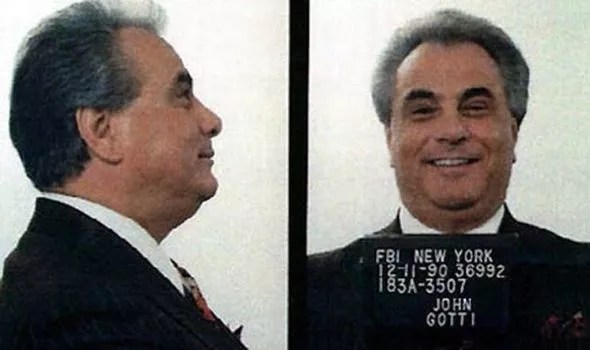
Gravano’s boss, John Gotti

If Gravano had a LinkedIn profile, it would be pretty impressive – – loyalty to his organization, steady rise to top management, etc. – – falling short, however, in the areas of education (8th grade), and the fact that he, uh, spent over 22 years in prison. (I did check and no, he has no LI profile- yet).

Sammy ‘The Bull’ Gravano – mug shot 1990

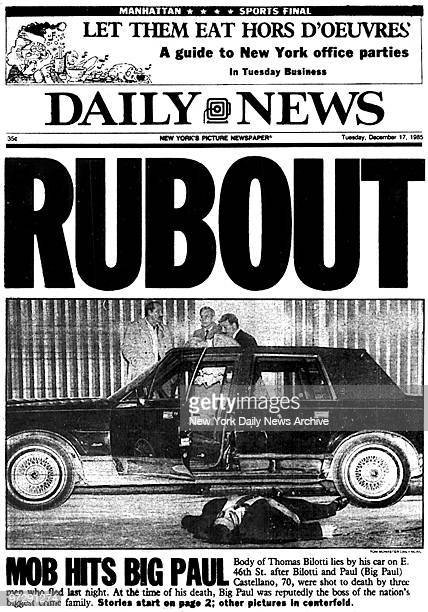
His list of crimes ranges from the petty (stealing spare tires from car trunks when he was in a street gang) to shakedowns of various flavors, to the truly horrible – murder, either directly or as a planner, 19 by the FBI’s count (most famously, planning and executing the murder of the head of his own Family, ‘Boss of Bosses’ Paul Castellano, Gotti’s predecessor – in the middle of Christmas shopping crowds in NY in December 1985). 

DECEMBER 17, 1 The body of Thomas Bilotti lies by his car on E. 46th St. after Bilotti and Paul (Big Paul) Castellano, 70, were shot to death by three men, who fled. At the time of his death, Big Paul was reputedly the boss of the nation’s biggest crime family., (Photo by NY Daily News Archive via Getty Images)

The first lesson is compartmentalization.  I’ve always felt that there’s something to be learned from virtually everyone – from career mentors to role models to competitors to my dog Rizzo, who is super capable of being in the moment. It requires focusing on something important and ignoring everything else.

In this case, learning from a mobster requires the ability to separate the guy described above from the gruff, but relaxed and confident 77-year old you hear in the podcasts.  While he committed a lot of heinous crimes that can never be forgiven, at the same time he also has some interesting takes on his past that can be helpful to us ‘legitimate’ people.

  • Gravano is a master compartmentalizer – – rationalizing the crimes of the past and softening them with statements about how he always did the right thing or what was required of him after pledging loyalty.
  • Moral Hazard Disclaimer: You need to be comfortable with the fact that listening to his podcasts in some way puts money in his, and Patreon’s, pockets.

Lesson:  Loyalty to the organization, but with limits.  Everyone knows that the Cosa Nostra demands utter loyalty – above family and faith.  You do what the Boss demands without question, you keep him informed, you expect the same from those you lead.  The penalty for screwing this up was usually not living long afterward.

  • Gravano took his loyalty oath seriously but not blindly.  When the mercurial Gotti would order a hit, Gravano on multiple occasions would challenge Gotti’s command, encourage him to calm down and reconsider, rather than act on impulse and create bigger issues.
  • At the same time, after both of their arrests in 1990, when Gravano heard that Gotti had asked for a plea whereby he would throw Gravano under the bus, he reconsidered his view of loyalty and cooperated with the FBI against Gotti.
Testifying against Gotti
Friday, April 3, 1992 edition of the New York Post

Lesson: Win-win.  Gravano had outsized influence with labor unions on huge construction projects (not a few of which were Trump projects).  Rather than exerting influence through threats of violence, he created unique schemes whereby all parties came out ahead (except, of course, the people paying for the buildings) – ensuring the loyalty of those he got payments from. And while his education stopped at 8th grade, he had practical experience running construction companies and was adept at running the numbers.

See also:  Speak softly and carry a big stick

Lesson:  Loyalty to people.  Without question, personal loyalties were extremely important to Gravano, and he would go to significant lengths to help those he had loyalty to, even at personal risk, often for no financial benefit.

Lesson:  Planning.  Hearing the planning involved in some of the hits is eye-opening; sometimes it would take months. Staking out, detecting patterns, having plans and back-up plans, deploying decoy cars to block or distract police, etc.  The goal was to anticipate every possible scenario and cover for it.

Lesson:  Sunk cost.  Despite planning, sometimes the unexpected did happen – -and despite having lots of assets in place, at times Gravano would assess the situation and cancel the hit.  Considering the severe potential consequences of not executing the plan, this was no small decision.

Lesson: When in hole, stop digging.  Gravano was arrested in 1990 and served 5 years as part of a plea deal, released in 1995, moved to Arizona.  The end of roughly 20 years in the mob, with access to the Witness Protection Program (which he quickly opted out of).  Free to start anew.

Which he did. In 2002, he was arrested for running a drug ring, got a 20-year sentence and was released a bit early in 2017.  Oops.

He is by all appearances walking a straight path now.

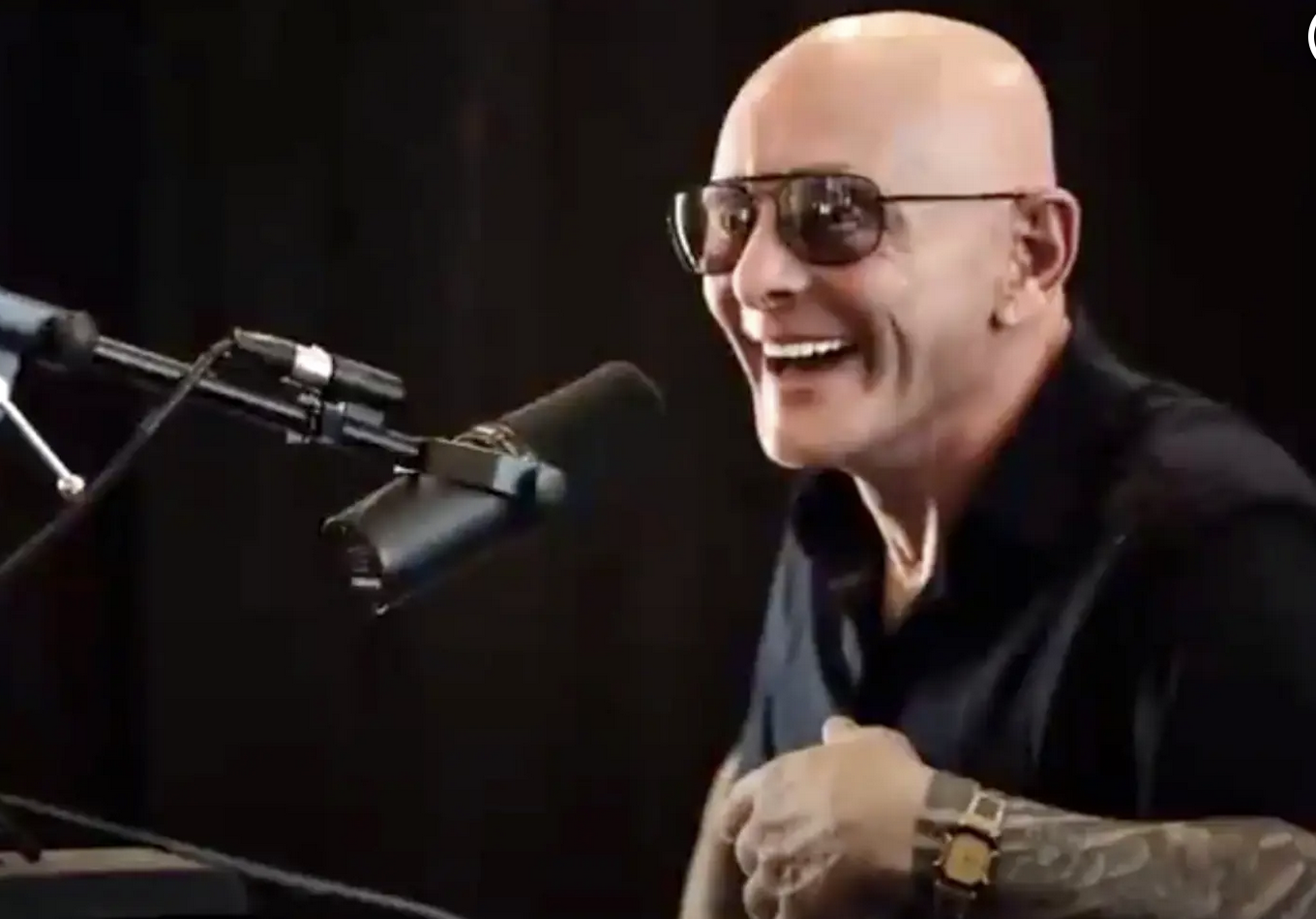
Sammy ‘The Bull’ Gravano – podcaster

Final lesson: Adapt and survive.  This poorly-educated, street-smart, morally challenged 77-year old was previously mostly comfortable with a gun.  He is now a podcaster and YouTuber, and you can hear him grimace when he asks you to ‘Like and Subscribe’ at the end of his podcasts, as his handlers insist.  He also now does live ads for companies like watch company MVMT (“I don’t often take off my Rolex, but when I do, I wear MVMT” or “I know about doing time”), or counseling company betterhelp, or online insurance broker Policygenius. He also has a website and a number of other ventures.

Re: adaptability, see also: Madonna

It’s a strange world.  Competence comes in all shapes and sizes – – some of the most brilliant minds unfortunately are those of criminals, for example:

  • Hijacker D.B. Cooper
  • Hackers
  • Ted Kaczynski (Unabomber) – evaded capture for 20 years
  • Frank ‘Catch Me If You Can’ Abagnale (although apparently some of his stories are made-up, making them a different type of scam)
  • All the real smart ones who haven’t been caught

We can’t (and shouldn’t) benefit from the crimes of others, and criminals should not be rewarded for their crimes.

But there can be a benefit from observing criminal minds.

I BEGGED to be cancelled, and failed. Where did I go wrong?

Lots of people are getting cancelled these days. For most of them, it wasn’t something they wanted.

Cancel guy

I, on the other hand, wanted desperately to be cancelled, and my best efforts yielded exactly no results.  It left me somewhere in between ticked off and sad; call it pissappointedMy story is below, in blue.

We are referring, of course, to subscription auto-renewals (aka ‘evergreen clause’ or ‘negative option clause’, or in the words of one congressman, ‘zombie contracts’).

Auto-renewal practices are a critical way of sustaining revenue, but if done too aggressively, there are potential huge costs in losing customer goodwill and provoking litigation.

https://www.pewtrusts.org/en/research-and-analysis/blogs/stateline/2017/02/27/didnt-see-that-renewal-notice-some-states-are-trying-to-help

auto-renew cycle

One survey found that 59% of consumers had been auto-renewed in one way or another without their informed consent, at an average cost of $186https://www.nclnet.org/ftc_autorenew

This is often related to free trials with a commitment buried in the fine print, but it’s not always the case, as I experienced.

section-free-trial-mobile

Auto-renew allows companies to lock in revenue, often without the consumer even noticing. And they rely heavily on this practice; you will have to pry a company’s cold, dead hands off your money (usually with a lawyer’s help) before you get anything back.

Turns out I’m not the only one who’s been disappointed.

As a result, a lot of states are working on legislation to control abuse of the auto-renew, led by California’s Auto-Renewal Law (ARL), which took effect July 1, 2018 and prohibits automatic renewal of subscription or service fees without first presenting consumers with certain terms, and obtaining their affirmative consent.

The questions here:

  • What is the moral obligation to inform customers before they are going to be charged?
  • Is the retention of some proportion of ticked-off customers worth the blowback when they tell their friends/colleagues about it?
  • What actions can you take as a marketer or as a consumer, to avoid the need for litigation?

My story:

  • April 2018 – signed up for one year of online survey company’s premium package to support consulting work.  Not aware of any auto-renew commitment.
  • April 2019 – found out my credit card was automatically charged for another year.  Still used the service so no big deal; still, irritating to get neither a heads-up nor a confirmation that a charge was made.
  • March 2020 – didn’t need service anymore.  Through my account portal, cancelled and switched off auto-renew a month before renewal (on advice of the company).
  • May 2020 – surprised to find that I’d been auto-billed again, despite cancelling.   No email notice.
    • Emailed company: ‘must have been a mistake; don’t need it anymore, please reverse charges, thank you’.
    • Company responds that a) their records show that auto-renew was reinstated on my account (which it definitely wasn’t!)  b) you are ineligible for an exception because it renewed over a month ago  c) we cannot give full or partial refund.  d) you should know this; it was in our T&C when you signed up (you noob).
    • Increasingly animated emails from me met with consistently anodyne ‘geez, we’re real sorry, you messed up, we can’t do anything about it’ responses.
    • Stopped payment on credit card; company now has cover and responds with: “Although our system showed that you re-instated your subscription, from your words, I know this was a mistake and clearly a human error.  Even if I could make an exception for you, because a dispute has been filed with the card issuer or bank, we can’t take any action on the account.”
    • Thankfully, the charge was ultimately reversed. 

But it was LOTS of effort, and let’s just say it won’t help their Net Promoter Score if I am asked for my opinion.

online-reviews

————————————————————————————

This is a big, popular, generally well-regarded company and they’re clearly taking all steps possible to maximize revenue retention.  How many other companies are using the same tactics?

Disable auto-renew

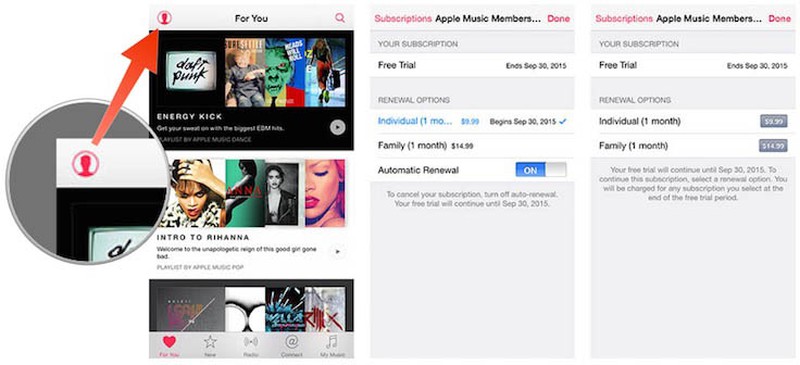
Well, in the last few years, over 100 companies have been sued for deceptive auto-renewals, including those shown below (spawning a cottage industry of how to disable auto-renew):

Screen Shot 2020-08-23 at 8.25.16 PM

Sirius XM

Noom

Angie’s List

Dropbox

Spotify

Hulu auto-renew


Hulu

SeaWorld

Birchbox

LifeLock

AAA

Blizzard Entertainment (World of Warcraft)

Gunthy-Renker (Proactiv skin products)

Apple-Music-Auto-Renewal1

Apple

eHarmony.com

Tinder

Blue Apron

Cancel-McAfee-Subscription


McAfee

Ancestry.com

New York Times

Consumer Reports

WalMart’s Beauty Box

It is no secret that a renewal is way more profitable than acquiring a new customer, and the fight for customers is fierce, so the focus on retention is understandable.

Retention-844x422

But at some point the negative impact of heavy-handed tactics, in terms of brand goodwill and image (not to mention litigation costs), could overwhelm the benefit.

My advice:

IF YOU’RE A MARKETER OF SUBSCRIPTION PRODUCTS OR SERVICES:

  • Become familiar with, and follow, California’s ARL; it looks to be the standard going forward
  • Offer in-between solutions that give the customer relief, but keeps them in the fold and positive.  (Example: when I tried to cancel my Audible subscription when my commute was drastically shortened, they offered a deal of $10/year to retain the books I already had, rather than losing everything.  That was a good solution for me.)

ec4fd5905c6732f9-800x386

IF YOU’RE A CONSUMER:

  • Read the fine print on everything you sign up for, and keep careful records
  • If you want to downgrade your level, challenge the company to provide a better option.  Frequently they’ll do anything possible to keep you.
  • Certain apps like TRIM https://www.asktrim.com/ automatically detect recurring charges on your credit cards; they can help identify needless renewals and help with cancellations

Loyal customers

IF YOU’VE READ THIS FAR:

  • Thanks for your patience and loyalty. You have automatically been renewed to follow The Armchair MBA for another 5 years.  You have no opt-out before that time.

Mom’s making lemonade – what’s your excuse?

Mom’s making lemonade – what’s your excuse?

Over the last week, shelter-in-place restrictions due to Covid-19 have turned the work landscape upside down.

This is one story of how one person, given lemons, has made lemonade.

Mom turned 89 last week.  She has been a lifetime pianist, still does performances at senior homes several times each month, and has been teaching now for about 65 years, currently with about 5-10 weekly students.

Mom then and now

The new workplace rules prevent in-person lessons, and as anyone who ever took piano lessons knows, skills deteriorate quickly.  This is not good when you’re a piano teacher.  You need your students to continue to move forward with their skills.

So, with guidance from a former piano student (now at MIT), Mom decided she would try to teach remotely.

And that is exactly what she’s done.

chrome zoom

As she described it excitedly yesterday:

It’s really very easy.  I’m using Chrome, and the Zoom app.  My students (aged 7-17) are quite capable of setting up a camera to show their hands on the keyboard.  I send them an invitation, give them the code, and off we go.  I see their hands, and they see me.  It actually works better for the younger students because they are forced to figure things out for themselves”.

Mom online

Mom has successfully completed her first 5 online teaching sessions, with more to come.

She did not have this skill last week.

What barriers are you facing?  What’s your excuse? 

Love you, Mom.  And yes, I’m washing my hands.

Introducing Quadrant Corner! All of Your Problems Solved!

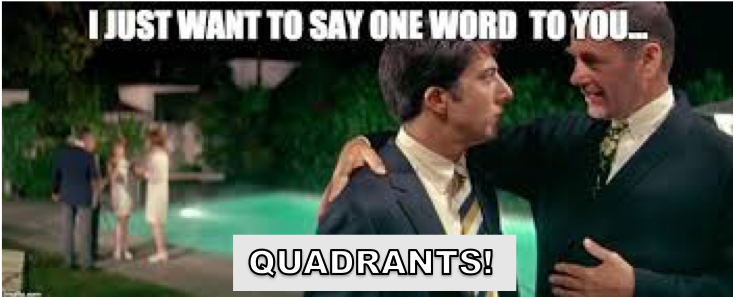
The best kept secret in business – – really – – that the nation’s top business schools are keeping from you is that all management issues can be solved through the use of quadrants.  Really, all of them.

Quadrants

This introduces Quadrant Corner, which will periodically shed light on how you can better understand some of the thorniest, as well as some of the most obvious, issues – – simply through the use of quadrants.

The best quadrants have two axes, where the resulting intersections have meaningful insights.

We promise to not bother you with stars or barnyard animal nicknames or anything like that.  That stuff is yesterday’s news.  And we definitely won’t use things that look like quadrants but are really just a way to stuff related ideas into a box to look more profound (and charge higher consulting fees).  Like the annoying SWOT chart – – which is just 4 semi-related ideas smashed together in a graphic.  Cha-ching!

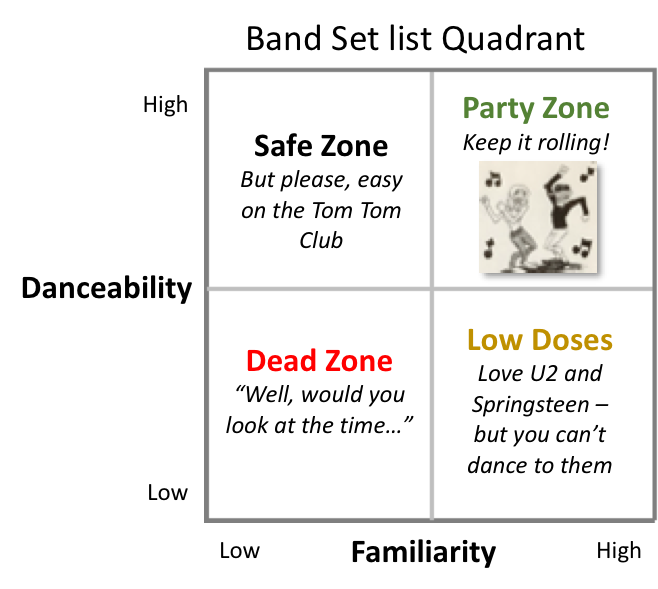
Band Set List Quadrant

We begin with the inspiration of music.

As someone who periodically plays music to get fellow old people to dance, I can tell you that the party song list is really important.  Every song must either be something danceable or something familiar – – and the best songs qualify in both categories (songs that have neither attribute are a quick trip to a short party).

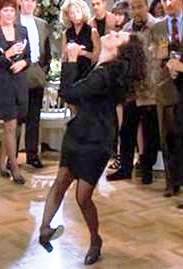
You need to jam the list with upper-right songs that everyone knows well enough to sing or air-guitar along with while they spill their G & Ts while unwittingly doing great Elaine imitations.

Elaine

It’s fine to throw in the occasional the danceable but less universally known songs – – your Beck, your Skrillex – -but don’t overdo it.  Similarly, fine to mix in a few stadium songs or ballads or Bohemian Rhapsody – – but don’t let your crowd get too comfortable.

The quadrant above shows the relationship between the appeal to the group (danceability) and the need to minimize effort (familiarity).

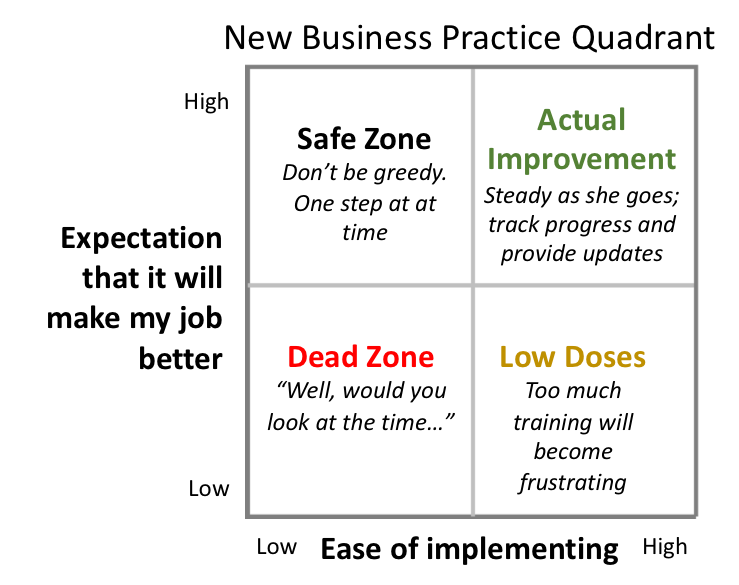
Business quadrant 2

The same theory could apply to implementation of new business practices (I know, I know – – just stay with me for a minute).  In a business context, appeal to the group is changed from can you dance to it to ‘what’s in it for me’ – – the expectation that the outcome of orientation/ training will be immediately beneficial (more $, greater chance for promotion, less tedium, etc).

On the other axis, the ‘required effort’ measure is defined as ease of putting the new approach into practice.  Like familiar songs, it’s comfortable to attend training where the concepts are easy and there’s a catered lunch.  However, a steady diet of familiarity – – or in this case, ‘fun’ training – – with no substantial hope of personal benefit, may be a welcome break from the routine, but is not a good long-term proposition.

So thanks for reading this first Quadrant Corner.  We need to check out now, to refresh ourselves on the deep learning of those well-regarded consultants EW&F.  Their first and most critical guiding principle:  never, under any circumstances, succumb to pressure to play ‘Celebration’.

EWF


Mainstreaming #Foodporn – – has it come to this?

Posted on

A story, perhaps apocryphal, describes the past-his-prime comedian who, when the laughs just aren’t coming, drops his pants, revealing brightly patterned boxer shorts.  Unfailingly it gets a reaction.  Problem solved.

There is an analog if you’re in the business of selling consumer products – – you need to have a compelling story to tell.  Brands who don’t know why they’re better than the competition often resort to fail-safe attention-getting tactics – – puppies, babies, tear-jerker stories, corn syrup…

…and of course, sex.

Burger Girl

Carl’s Jr./Hardees and GoDaddy.com are just two of the many who made sex their Unique Selling Proposition.  You can check their commercials out on YouTube; I cannot safely post a link here.

Both appear to have moved on, ostensibly to broaden their audiences as they move out of copywriting adolescence.  In the #MeToo era, many advertisers have thankfully become more sensitive in how they go to market.

Screen Shot 2019-05-29 at 11.26.16 AM

But there is a convenient alternative: #FoodPorn.  With a wink and a nod and a hashtag that telegraphs ‘we’re hip’, #FoodPorn is titillating with words otherwise not used in general conversation, but without the photos.  The buzzword gives permission.

In the most recent Super Bowl, Kraft Heinz’s Devour frozen food brand actually advertised on a real porn site, Pornhub.com, blurring the line between metaphor and reality.  The brand is positioned as ‘flavor first’, the very embodiment of FoodPorn, and thus this stunt was all a humorous, one-time attempt to make the point and get some attention.  But based on their website, they’re sticking with the FoodPorn angle.  Not sure what the results were, other than a ton of attention.

Screen Shot 2019-05-29 at 11.38.55 AM

But do we want to go there?  Despite the old adage, not all attention is good attention.  Most brands would prefer to focus on the product and avoid the crass associations that undermine credibility and turn off potential customers.  But not all.

Burger 1

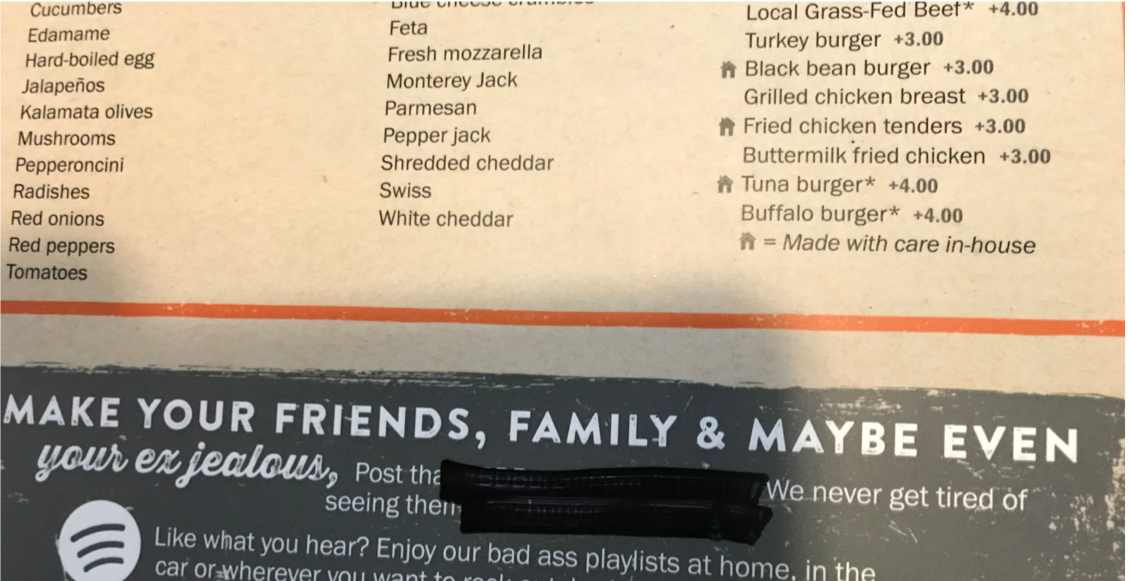
At a favorite burger chain recently (not fast food – – burgers are $10-14), where it talked about ‘friends and family’, part of the menu was blacked out.  Upon inspection, it revealed that the blacked out words completed the language: “Post that #BurgerPorn and tag us.  We never get tired of seeing them sexy burger shots.

Burger 2

Upon conversation with the waitress, this is a case of man bites dog.  The headquarters marketing staff decided to send sexed up menus to all of their restaurants, and in at least this case, the local owner disagreed with their judgment and took a marker to it.

I’m guessing the owner knows his customers, sees a lot of moms and dads, and drew the connection that they might not be interested in explaining to the kids what that all means.  (I had a similar experience explaining the Clinton impeachment hearings to single-digit aged kids).

The irony is that these guys have a great concept – outstanding quality, reasonably priced food in a very pleasant environment.

Why mess all that up and distract attention with references to #FoodPorn?

Screen Shot 2019-05-29 at 12.00.24 PM

Lawmakers Left and Right Shake Hands to Eliminate a Surprisingly Sinister Bias

Posted on

Washington, D.C. – in an increasingly rare act of bilateral cooperation, legislation was recently introduced into the U.S. House of Representatives to remove long-standing institutional bias against left-handed people.

Sistine

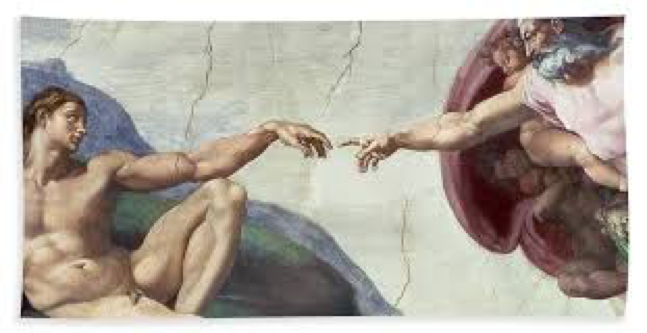
Adam – the first Lefty

With broad support, House Resolution 23B, titled “Leave No One Left Behind”, was reportedly instigated by prominent left-handed Supreme Court Justice Ruth Bader Ginsberg, with behind-the-scenes lobbying from current U.S. Senator Rand Paul and former U.S. Senator Olympia Snowe, both also left-handed.

RBG

While unable to comment due to conflict of interest issues, RBG discussed the subject at length in an appearance on ‘The Daily Show’ with Jon Stewart in 2012: 

People identifying as other-handed are 11% of the population, and while some extremely accomplished people are or were left-handed — for example Barack Obama, Leonardo da Vinci, Bill Gates, Oprah Winfrey, Jimi Hendrix, and Keanu Reeves — most walk amongst us largely unseen, unacknowledged and disempowered, and face bias every single day.  

Many civilizations’ conventions have ancient roots – – personal hygiene with the left hand, eat with the right, those sorts of things.  This was a necessary approach when washing one’s hands was not as easy as it is now.

However, a remarkable amount of bias remains, from the design of commonplace household objects, to the more insidious prejudice in our very language – – ‘left-handed compliment’, ‘left behind’, ‘on the right side of history’, for example – – and extends even to institutional infrastructure such as driving on the right side of the road and handshakes only with the right. 

Those identifying as left-handed, as well as ambidextrous (who are usually referred to as ‘ambi’), and even so-called cross-dominants, have long had to deal with challenges that most people don’t even think about.  While we are thankfully past the age when left-handers were forced to unnaturally mold to the societal ‘norm’ of being right-handed, the world is presumably more enlightened, and I think before I leave the Court there will be legislation to right this wrong – – excuse me (laughter) – – I mean correct the situation”.

The sweeping House Resolution comprises a broad range of recommendations, including:

Left-handed mug

Proposed left-handed mug

  • Requirement that every manufacturer producing right-handed oriented products also produce versions designed for left-handed consumers, as well as ‘ambi’ versions. This would include things like scissors, video game controllers, computer keyboards, tools, musical instruments, weapons and coffee mugs.  Included also is a mandate that makers of ink pens use only smudge-proof ink.
  • English words that have evolved from the word ‘left’ in other languages to more negative connotations will not be permitted in U.S. government activity, and following a 5-year transition period, will be illegal in all U.S. educational systems – including textbooks.
    This includes words like sinister, gauche, as well as phrases such as ‘left-handed compliment’, and other words such as ‘southpaw’ that could be felt to be demeaning.
  • Included is a provision that in all domestic U.S. Government meetings, whether internal or with suppliers, at least 15% of handshakes would be left-handed.

Left-handed shake

Left-handed handshakes may present challenges for some

  • All professional sports teams would be required to include at least 15% of members identifying as ‘left-handed’ or ‘ambi’. Corporations would have the same requirement for composition of Boards of Directors.
  • A large-scale initiative would require retrofitting every mile of the U.S. Interstate Highway System and all state highways to accommodate those wishing to drive on either the right or left side of the road, with completion targeted by 2030. This would be accompanied by a requirement that all automobile manufacturers doing business in the United States must make available right-hand drive vehicles.  The rapidly evolving driverless car technology will be counted on to facilitate this transition.

4-way stop

Future 4-way stop – CAD rendition

The cost of these changes is estimated to total roughly $20 trillion over the next 10 years.  And while this is broadly acknowledged to be a significant strain on the already burdened U.S. economy, there has been unanimous support from U.S. lawmakers, on both the Right and Left, particularly those facing re-election.

light switches

As a sign of gathering momentum, popular culture has taken up the cause.  As one unnamed self-identified ambi celebrity commented: “God didn’t just make ‘on/off’ switches – she made a good number of dimmers as well.  Regardless of where one may identify along the spectrum of handedness, a civilized society should be ready to accommodate everyone, whatever the cost”.

Does Your Marketing Have Holes You Can’t See?

You may have seen this interesting visual story recently as it made the rounds.

blog_raf_bullet_holes_0

It is a diagram of a World War II Royal Air Force plane showing where bullets had hit the plane.  The purpose was to direct where extra armor should be placed to protect other planes.  Makes sense, right?

Abraham-Wald-left-is-credited-for-saving-many-American-planes-and-pilots-based-on-his

As Mother Jones magazine puts it – ‘Obvious but wrong’.  Hungarian-born mathematician Abraham Wald explained that because all of the studied planes had returned, the study ignored those planes that were shot down – – and therefore where the true vulnerabilities were (the engines).

This is a pretty good metaphor for a classic error in marketing – focusing on the easily studied while ignoring what really needs attention.

streetlamp_v02-800x533

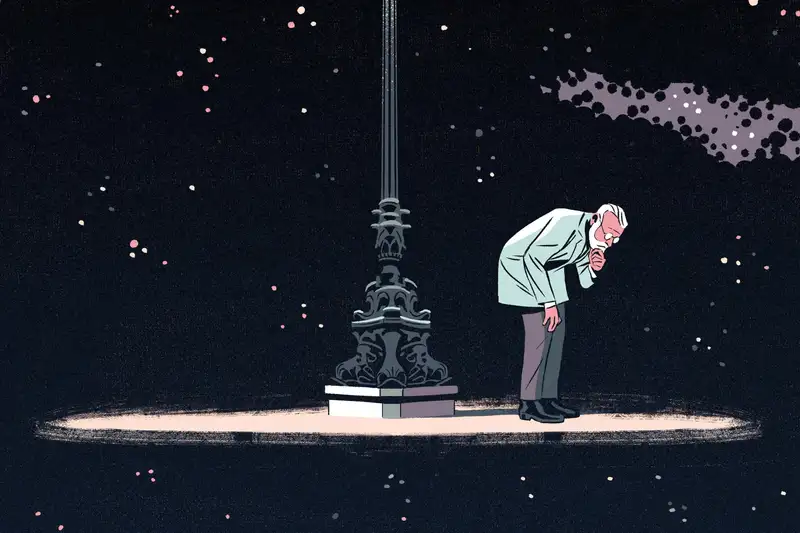
It’s like the guy looking for his keys under a lamppost rather than in the field where he lost them: “Yes, I did lose them over there, but the light’s better here”.

Studying only data at hand means you could be ignoring bigger opportunities that you can’t see.  For example:

  • Optimizing Instagram or Pinterest (or Google AdWords) can be of little use if your most valuable customers don’t go online that much
  • Segmenting your target based on demographics can be very ineffective if your target is attitudinally defined
  • Orienting marketing messaging to older buyers can be largely wasteful if the key influencers are their children
  • Paying attention to only those customers who Opt In in LeadGen may be ignoring higher potential customers who are too busy to be bothered and for whom email may not be the best approach
  • Spending a ton of money optimizing a trade show space may be less useful if only a small % of decision-makers still attend trade shows
  • etc.

Portrait of the artist as a shadow of his former self 1969-72 by Keith Arnatt 1930-2008


The solution is to make sure you truly understand your customer, their key attitudes, influences, preferences and pain points. 

Target customer

Only then can you put your reinforcement where it really counts – – and sometimes it’s the customers you can’t see.