Category Archives: Marketing and Media

10 Observations from the Real Man’s NRA Show

Posted on

What sort of a charmed life is one living when Chef Robert Irvine factors into it twice in a single month?  I had the pleasure of walking the floor at the National Restaurant Association show in Chicago this week, and was treated to a delightful array of sights, smells, tastes, huge portions of protein, and in the case of Chef Irvine, sounds!

RonSwanson2a

Overall, while there were no gangbuster introductions, the show seemed to achieve a cosmic balance of the healthy (e.g. gluten-free), the indulgent (pastry galore), the novel (spinach balls) and the old-school standbys.

Here’s a sampler from this roving do-it-yourself Lazy Susan:

1)    MO’ MEAT!  An unlimited assault of meat.  Australian Wagyu beef (unbelievable!), Ditka’s chicken sausage (should real men eat it?), bangers from Jolly Posh, jamon iberico de bellota, plain old hot dogs, and the list goes on.  A veritable on-the-fly charcuterie.  Ron Swanson’s vision of heaven.  Perhaps the only product equally welcomed at either NRA show.

AustralianWagyu

2)    Celebrity!  The boundary between cooking as craft and cooking as entertainment has been erased forever.  Anthony Bourdain, a few of Food Network’s A Team (Aarón Sanchez, Robert Irvine, Alexandra Guarnaschelli – and that was just the day I was there), and many others.  They attracted long lines, and in the case of the showcase demo area,  made a lot of noise (yes, that’s Chef Irvine wearing a tight black short-sleeved shirt for a change).

RobertIrvine

3)    Rising international influence.  The international representation of exhibitors was exceeded only by the internationality of the attendees.  Not just many countries, but lots of delicious cross-fertilization of ingredients and techniques. More proof of the unstoppable globalization of foods and flavors.  Peru debuted at NRA this year.

4)    Salmon –  oak or maple smoked, flavored, salty, delicious – – and in unlimited supply.  Like the brunch table at that swanky Bar Mitzvah you heard about but weren’t invited to. Maybe it’s been there all along, but I was astounded at all the options this year.

5)    Tchotchkes – Flo bobble-heads (from Progressive Insurance), t-shirts, cozies, pens, etc.  I was lucky to be on the floor close to the show’s end, and scored a nice bottle of Magueye Sweet Sap – – an old-but-new, tasty alternative sweetener.  You heard it here first.

Maguey Sweet Sap

6)    Umami – OK, there are 5 flavors now, just like there are 8 planets.  Forget what you learned as a kid.   It’s here, it’s savory, and it means great taste.  A whole area was devoted to just umami.

7)   Greek Yogurt – – it’s alive!  And not just in plastic containers any more.  Not only were Greek yogurt-based dessert options shown that more closely resembled ice cream sundaes, there was also Greek yogurt cheesecake, mac and cheese, and more.  Hmm…starts out as a healthy option, now loaded with sugar and other stuff.  We’ve seen this before:  energy bars, muffins, etc.

7)    Technology – from the large booths of companies like NEC and IBM, to small software entrepreneurs, at times the NRA looked more like a technology convention.  Whether hi-tech signage, online menu management software, or nutritional scoring, technology seems almost as important as the food in enabling operators to compete profitably.  Judging by a lot of sameness in some of the standard food offerings, perhaps it’s already passed food in importance…

9)    Alternative ordering/delivery  – GrubHub/Seamless, MobileTummy and others were pitching all manner of new ways to hook people up with food.  Order online, order by mobile, have it delivered, have it ready – – another case where technology is enabling options that are designed to match the way people live.

10)  Focus on kids’ health – consistent with NRA’s own Kids Live Well program, there were quite a few exhibitors focusing on not only healthier fare that kids might actually eat, but techniques to evaluate nutritional content and make good choices as foodservice operators, as well as consumer-friendly apps to make it easier to find a restaurant with kid-friendly offerings.

And now to the Stairmaster.

Are New NCAA ‘Play-Out’ Exhibition Games the Real Madness?

Posted on

You may have already heard that late Sunday night the NCAA abruptly announced the biggest change to the NCAA Division 1 Men’s Basketball tournament (‘March Madness’) since at-large teams were first allowed in 1975 (previously only one team per conference was invited).

The short story: on Final Four Sunday, April 7, the day before the Final, there will be now be 3 so-called ‘Play-out’ exhibition games between former No. 1 or No. 2 regional seeds that have been eliminated (including Ohio State, Indiana, Duke, Kansas, Georgetown and Miami; specific matchups and times to be determined).  These games carry no official significance but clearly will have strong fan appeal.  CBS will schedule these games so as to not interfere with the Academy of Country Music Awards broadcast, which starts at 8pm EST.

March-Sadness

NCAA officials explained these changes as an effort “to satisfy the unexpectedly strong recent demand among NCAA Basketball’s rapidly growing fan base, particularly internationally”.  It is no secret that March Madness has evolved into an enormously popular event.  Even President Obama took time from his schedule to weigh in.  In addition, the event’s female viewers, already 48% of the audience, make up an increasingly ardent fan base.  Still, satisfying new fans is not at the center of this decision.

The real motivator is much simpler:  Money.   Turner Sports and CBS, seeing early tournament exits by most of the more popular top seeds, are exploiting the networks’ unsurpassed ability to create more hours of high-quality entertainment.  Advertisers have already signed on, and since the participating schools were offered a generous share of the revenues, gaining their participation was relatively simple.  Only former No. 1 seed Gonzaga declined the offer, due to a conflict with a Tech N9ne concert in Seattle.

BBall Money

This is a sad example of short-sightedness, laying bare the craven quest for TV ratings that we now see is the real driver behind many of the sporting world’s decisions.  Unfortunately, it is a severe body blow for the integrity of NCAA Basketball and big-time sports.  Clearly, the theory goes, while everyone loves a Cinderella, you still don’t really expect huge numbers to tune in for Wichita State, right?  So, why not just bring in the biggest names for a curtain call?

Here’s why –  in this era of sports free-agency and seemingly limitless payrolls and budgets, it’s important to remember that the unexpected can and does happen – – with talent, grit and maybe a little luck, on any given day, David can slay Goliath.  Hence the excitement for FGCU and Wichita State.  They’re the real reason we tune in to March Madness, even if they do destroy our brackets.  Diluting the event with meaningless games just for spectacle will only cheapen the NCAA brand while overshadowing the teams deserving of our attention.

So, a message to the NCAA, CBS and Turner Sports:  you’ve got a jewel in the current March Madness (as long as the field doesn’t expand) – and it’s exactly what people are looking for — as is.

Would you prefer pink slime or horsemeat with your burger?

Well, neither, actually, thank you.  If you’re talking about things that we’d rather not see in our food, you can add melamine to the mix.  All three caused quite a commotion when stories broke revealing their presence in the food supply.

In that respect they have similarities; in other ways they couldn’t be farther apart.  In all cases, the media played a key role.

First, a brief recap (if you’re up to speed, skip to the meat of this post below).

Melamine – – an organic compound, used to make familiar things like Formica, dinnerware, laminate flooring, and white boards.  Melamine also is toxic, and can falsely indicate high protein content in foods.  These characteristics came together with tragic consequences in 2007 and 2008, when Chinese-sourced infant formulas and pet foods that had had their protein counts ‘boosted’ with melamine led to six infant deaths and hundreds of thousands of injuries, as well as a lot of killed or harmed pets.

Melamine mom

Pink Slime – – known more commonly in the meat biz as Lean Finely Textured Beef (‘LFTB’), is ground-up low-grade meat byproducts that has had the fat removed, and was approved in 2001 for use as a filler at up to 25% of ground beef content.  In 2012 a scandal arose when it became known that as much as 70% of the ground beef sold in the US contained LFTB but was not required by the USDA to be identified on labels.  While not posing any health risk, public outcry focused on the fact that with no label disclosure consumers were not able to make informed decisions.

pink slime

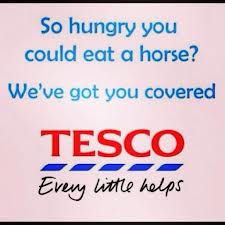
Horsemeat — just this week, An Irish meat processor recalled 10 million burgers from supermarkets across Ireland and Britain amid fears that they could contain horsemeat, a discovery that poses no danger to public health but threatens to harm Ireland’s important beef business.  While the concept of horsemeat is not particularly appetizing to a US culture that idolized Seabiscuit and Mr. Ed, apparently that’s not a universal feeling.  In fact, according to Food Manufacturing, “much of Europe happily consumes horsemeat as a delicacy.  Still, ‘The Irish are known for their respect of the horse, and they’re not used to eating horses,’ the French newspaper Le Figaro explained Wednesday to its readers.”

tescoscared horse

How are these three things similar?   Easy:  with all of them we were served a nasty surprise regarding our food, which is never going to go down smoothly.

How are these different?  Well, in a few ways.

1) Benefits/Dangers – – Melamine is toxic, period.  It provides no benefit in food other than to increase profits for the producer.  LFTB is clearly not harmful, although it has less protein than the beef it replaces.  On the other hand, it helps reduce beef’s fat content, which is good, and can help reduce retail prices of ground beef, a benefit generally appreciated by consumers.  Horsemeat is similar to LFTB in that it is not harmful, but in this case it seems to have been secretly added to ground beef solely in an effort to increase profits.

2) Outcome of the scandal – – Melamine – – boycotts of Chinese products worldwide, 21 convictions, including 19 long sentences and two death sentences in China.  On the plus side for consumers, it has led to longer-term enhancements in food supply chain testing and security.  LFTB – – as a result of the media frenzy, several beef processors went bankrupt, eliminating thousands of jobs and driving higher prices at the shelf.  Horsemeat — still unfolding.

melamine china

3) Role of the media — with melamine, the media was essential in uncovering the scandal and demanding quick action and accountability.  With LFTB, the media seemed less interested in pushing for the public good than in fanning hysteria (and circulation) using the irresistible ‘pink slime’ nickname.  Certainly without that name there would have been far less outrage.  With horsemeat, the media is somewhere in between – – apparently staying mostly objective and reporting the facts, so far.

slime headline

What is the meat of the matter here?  What are lessons for producers and retailers?

–> With the broad footprint of upstream suppliers and the highly dispersed market for downstream finished products, there can be no such thing as too much supply chain traceability and security, and with access to the right information, consumers will increasingly be willing to pay for safety.  Manufacturers and retailers have a potential danger in the event of an ingredient scare, but also an opportunity to use traceability and source of supply as differentiating advantages, by simplifying sourcing, and investing in supplier audits and shipment tracking automation.

food supply chain

–> Consumers will continue to demand transparency regarding what’s in their products.  Manufacturers and retailers will need to increasingly provide it to stay competitive.  To some extent this is not easy; research shows that consumers often have a knee-jerk reaction to the sound of an ingredient (e.g. ‘pink slime’) without bothering to know the facts.  But pink slime is a very obvious example; there are more subtle perception dangers even with very useful ingredients (propionic acid is naturally occurring and helps prevent bread mold; alpha tocopherol is just another name for Vitamin E; and ascorbyl palmitate is an antioxidant and nutrient; etc.).  Claims like GMO-free can provide a marketing benefit but can also generate significant added costs.  Country of Origin Labeling (COOL) is a great concept but can get murky depending on where a product is grown, processed or packed.  Net, providing transparency is a worthy goal but it is still very tricky and will require ongoing management.

ingredient line

–> Social media has helped create a situation where consumers act immediately on rumors and don’t want to wait for facts, which puts all producers at greater risk of a Pink Slime-type incident.  In some ways, this is a risk that is hard to mitigate.  The best advice would be twofold:  1) err on the side of greater disclosure of ingredients so the message can be proactively managed; and 2) in the event an ingredient issue surfaces, use the same social media to immediately acknowledge the problem, present the facts, and communicate what the company is doing about it.

twitter panic

–> The media must remember that with its power comes a responsibility to maintain objectivity, balance and context in reporting the news.  A pink slime-type episode, where sensationalism trumps perspective, can make for interesting copy, but can also have real consequences for real people.

wendys finger

Scotts vs. Pennington: Grass Stains

Posted on

It’s springtime in the US, and the sounds of birds chirping and squirrels chattering are being drowned out by Scotts and Pennington going after each other like Itchy and Scratchy.  For peat’s sake, what’s going on here?

For starters, seems there’s a violation of that age-old marketing axiom:  don’t legitimize your smaller competitor!  (I mean, would Mitt have belittled Ron Paul?  Do the Kardashians need to compare themselves to Snooki?)

Scotts Company – the 800 lb gorilla.  If you can fog a mirror you have heard and/or seen a lot of a Scotsman named ‘Scott’ of Scotts doing a pitch for TurfBuilder grass seed in a slightly cartoony but mostly agreeable faux-brogue.  This is prime time for the enormous lawn care industry and Scotts brought their A Game with breakthrough advertising with a simple message and catchy mnemonic.  And who doesn’t know Scotts?  They are the 800 lb gorilla in lawn care.  All they really need to do is remind you of the need, the name, and where to buy.

The scrappy upstart. So what happens?  A much lesser known (perhaps until now) competitor named Pennington Seed Company and Scotts have apparently gotten sufficiently in each others’ grills with competitive claims that there has been a spate of back-and-forth lawsuits in the last few years.  Unlike most categories where Scotts dominates, Pennington actually claims share leadership in their specialty, seed.  And in an effort to directly tweak their nemesis, Pennington currently is running copy claiming that Scotts seed products contain filler.

You said their name was Pennington?’  Amazingly, Scotts has responded by running spots mentioning Pennington by name with ‘Scott’ also saying on radio he’s got ‘a bee in his britches’ about the claim Pennington is making regarding seeds.

One can just imagine how ticked off Scotts management must have been to approve the spots (likely over the agency’s guidance), and maybe it feels good, but this can’t be a good move.  By contesting Pennington’s position in a portion of the business, seed, Scotts has now validated Pennington as a broader lawn care company, making it easier for them to increase their offerings beyond seed.

“I’d like to acknowledge my competitor, who is way behind in the polls”.  Everyone who would have previously looked past Pennington on the shelf now has some level of name recognition and credibility-by-association, so this can do nothing but help Pennington when clearly Scotts’ objective was the opposite.

Separately, over the last year Scott has launched more detailed explanatory videos on YouTube, documenting exactly what is in a bag of Scott seed.  Because this is likely to be viewed only by people who are already involved in the category, contrary to their broadcast marketing efforts, this seems like a very smart move.

Will be interesting to see how this plays out – – a lot of green is at stake.